The AFERIY P310 has the makings of a useful workshop or home backup battery. Its 3,600W inverter handled our Ninja air fryer with the display showing around 2.4kW of output, while optional batteries can increase capacity from 3.84kWh to 11.52kWh. Adjustable mains charging, substantial wheels and a retractable handle add to its practicality. The frustrations appear in everyday use. Downward-exiting UK plug leads obstruct the handle’s path and can foul the floor, while the app delivered contradictory account errors before we could get started. The hardware makes a stronger impression than the software, although at 40kg you’ll want to find it a sensible home.
Reasons to buy
Reasons to avoid
Why you can trust TechRadar We spend hours testing every product or service we review, so you can be sure you're buying the best. Find out more about how we test.
The P310 is a portable power station you measure up for before it arrives. At 584mm long, 321mm wide and 464mm high, it occupies a substantial patch of floor. The Bluetti Elite 400 fits the same 3,840Wh into a footprint roughly a third smaller, despite weighing only about a kilo less. Side by side, the AFERIY’s extra length is immediately apparent.
Recessed carrying handles at either end help when lifting it, while large wheels and a retractable trolley handle make moving it across a level floor more manageable. There is still 40kg to deal with when you reach a flight of stairs or a car boot.
The front panel is straightforward. USB, DC and AC outputs have separate buttons, and the illuminated display shows battery percentage, input and output wattage, and estimated remaining time. The large figures are useful when checking it from a standing position.
One feature I particularly like is the physical mains-charging dial. Its marked settings run from 400W to 2,200W, giving you direct control over charging demand without opening an app. It’s a simple addition that becomes more welcome once you’ve spent time with AFERIY’s software.
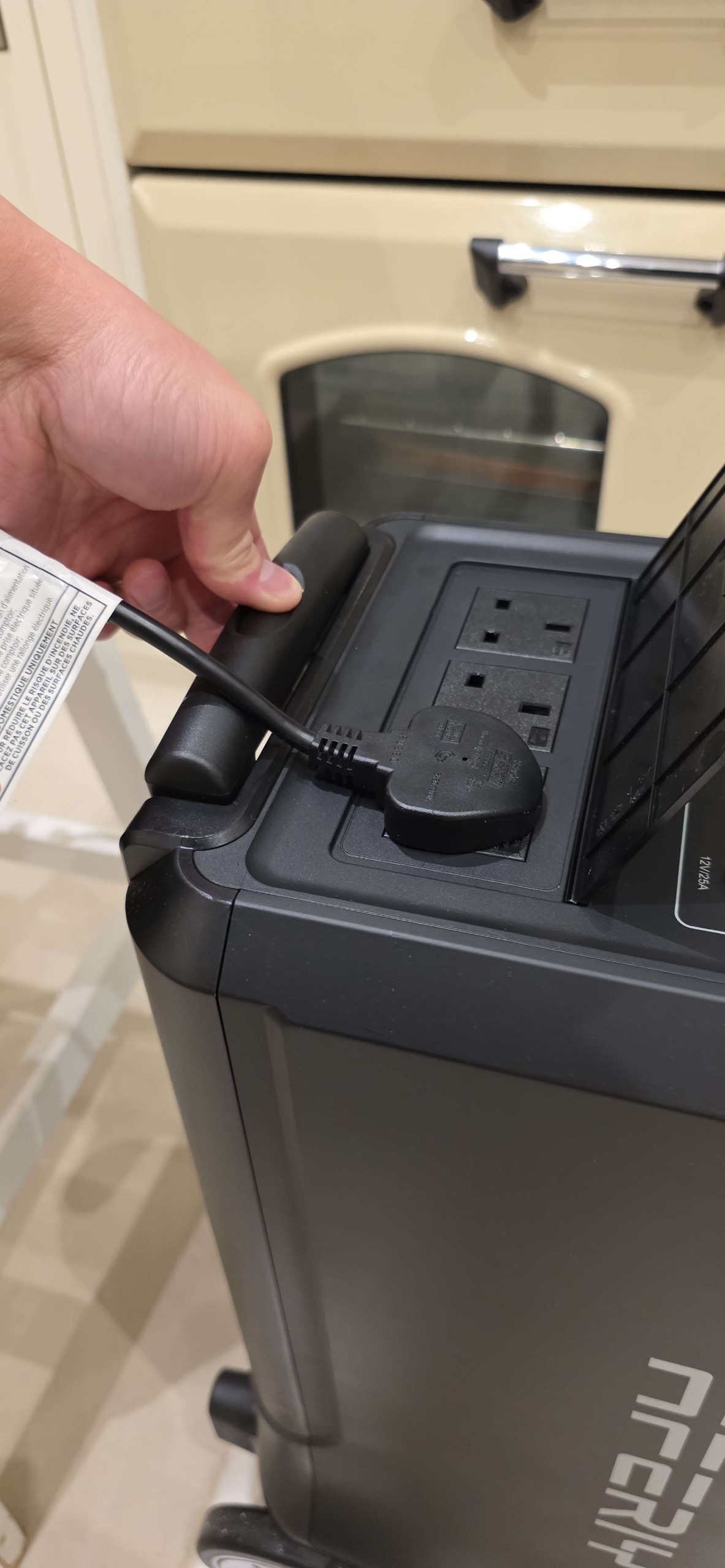
The UK socket placement is less successful. Three Type G outlets sit behind a flap at the bottom of the front panel, immediately above the stowed trolley handle.
With a typical moulded UK plug, the cable exits downwards and crosses the handle’s path. Depending on the lead and its strain relief, it can also meet the floor and bend sharply below the plug. Our photographs show the interference clearly. You need to manage the connected cables before extending the handle.
An alternative position helps. Rubber supports allow the P310 to stand on its rear end with the front panel facing upwards. This reduces its footprint and gives plug leads more clearance, while bringing the controls within easier reach. It’s useful flexibility, although I’d still prefer more generous clearance around the sockets in the normal wheeled position.
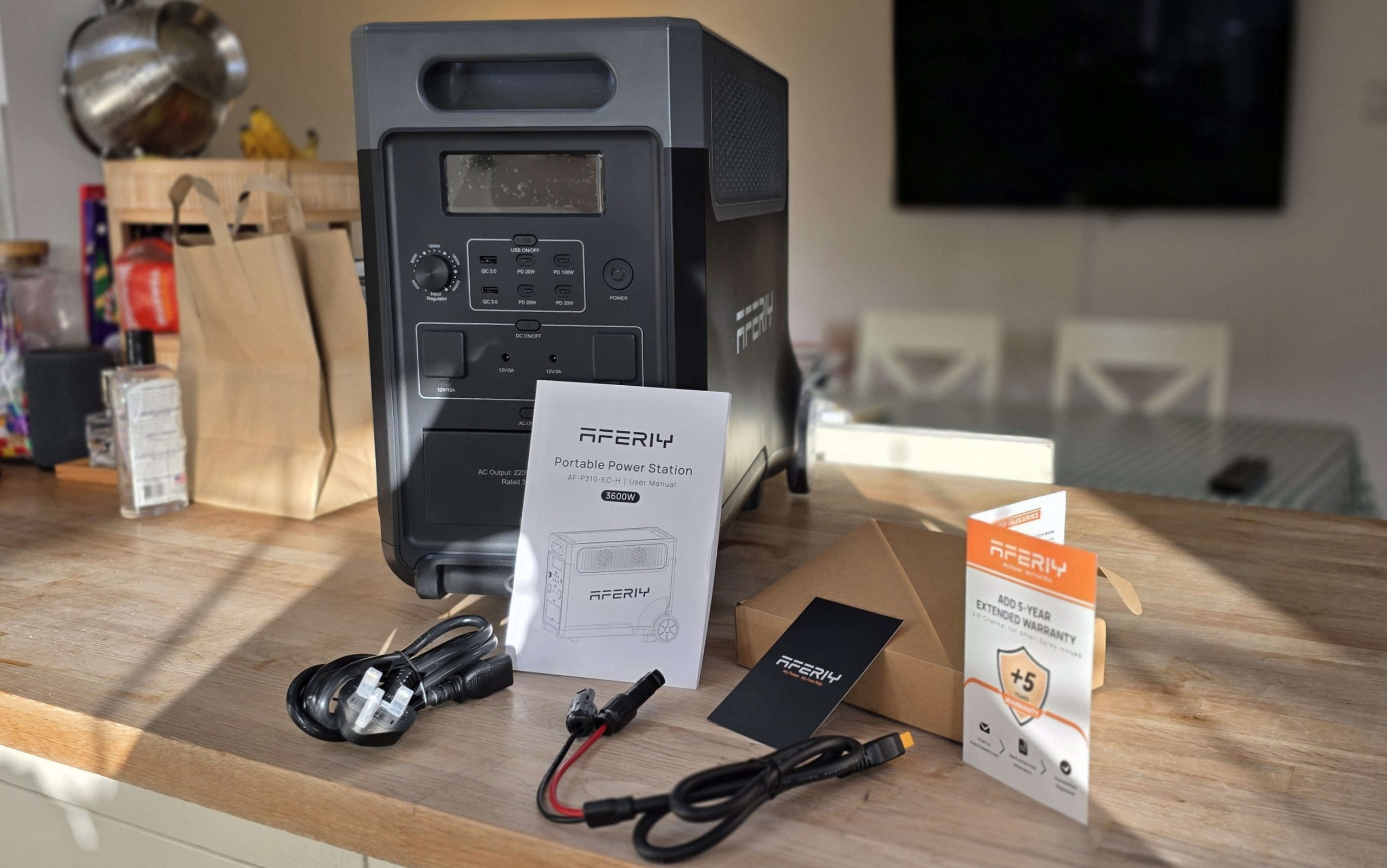
At the rear, a covered panel houses the mains inlet and DC charging connections, with two expansion-battery ports below. An LED light completes the arrangement.
The UK prices previously checked were £1,269 for the expandable P310, £2,468 with one expansion battery and £3,667 with two. At those bundle prices, each additional 3.84kWh costs £1,199.
The base unit looks the most appealing starting point. Adding a battery nearly doubles the initial bill, so I’d want a clear idea of my daily consumption before ordering one. Being able to expand later is useful, particularly if your backup requirements change.
The P310’s 3,600W continuous AC rating provides scope for demanding household appliances. That output is shared across the three sockets, so the combined load still needs to stay within its limits.
We connected a Ninja double-stack air fryer, with the P310’s display showing approximately 2,433W of output while it was running. That provides a practical demonstration of the unit supplying a substantial kitchen appliance from its battery.
An air fryer’s heating elements cycle during cooking, so this reading doesn’t establish the energy used for a complete meal. It does demonstrate a useful application for the inverter’s capacity.
There is an important distinction on the review unit’s rating label. Battery-powered operation is rated at 3,600W, while UPS mode is marked at 2,500W. Anyone planning to leave demanding equipment connected while using the P310 as a backup should account for that lower figure. The manufacturer also claims a UPS switchover of 10ms or less.
Smaller devices have a good selection of connections. There are four USB-C ports, with one rated at 100W and the other three at 20W each. Two 18W USB-A ports and several 12V outputs complete the front panel. The P310’s app correctly reflects that USB arrangement.
Mains charging is rated at up to 2,200W. Our photographs captured 2,202W on the unit’s display at the highest setting, along with a separate reading of 1,200W at a lower setting.
The physical regulator makes it easy to reduce charging demand when other equipment is using the available supply. It also suits overnight charging, when there may be several hours available and little reason to use the maximum setting.
AFERIY specifies up to 2,000W of solar input and a combined mains-and-solar charging limit of 3,500W. Taking advantage of the solar ceiling would require a suitable array within the unit’s voltage and current limits.
The app was the most frustrating part of getting started.
Attempting to log into an existing account produced a message stating that the account did not exist. Trying to register with the same details then produced the opposite response, stating that the account already existed. That leaves the user caught between two contradictory messages with little indication of how to proceed.
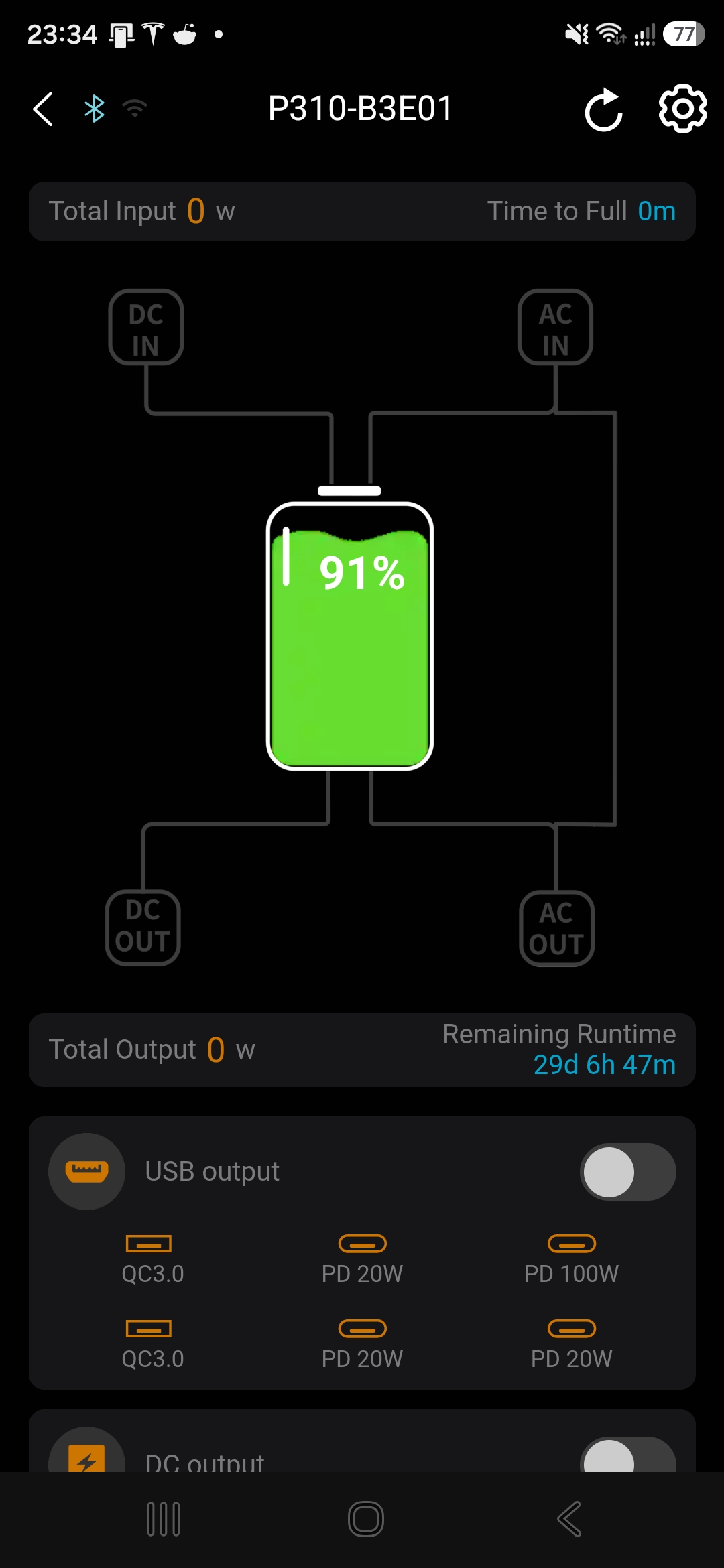
Once connected, the dashboard provides battery percentage, input and output wattage, estimated charging time and remaining runtime. Separate switches give access to the USB, DC and AC outputs, alongside controls for the LED light and its steady, SOS and flashing modes.
The settings menu includes energy management, charging limits, screen timeout and standby time. There is also a switch for the button sounds, which is welcome if the unit is staying indoors.
Visually, the interface feels dated beside the EcoFlow and Bluetti apps. The oversized battery graphic, schematic connecting lines and inconsistent iconography give it an old-fashioned appearance. The main information is readable, but the presentation lacks the polish I’d expect alongside a power station costing over £1,000.
There are other signs that the interface needs attention. Our UK unit’s dashboard displayed an “AC 30A” label despite the hardware having three Type G sockets. With no output load, it also showed an estimated runtime of more than 29 days, a figure that tells you little about how long it will power your appliances.
The contradictory account messages were the more consequential problem. A dated appearance is easy enough to live with. Software that sends you in circles before you can access your equipment is harder to overlook.
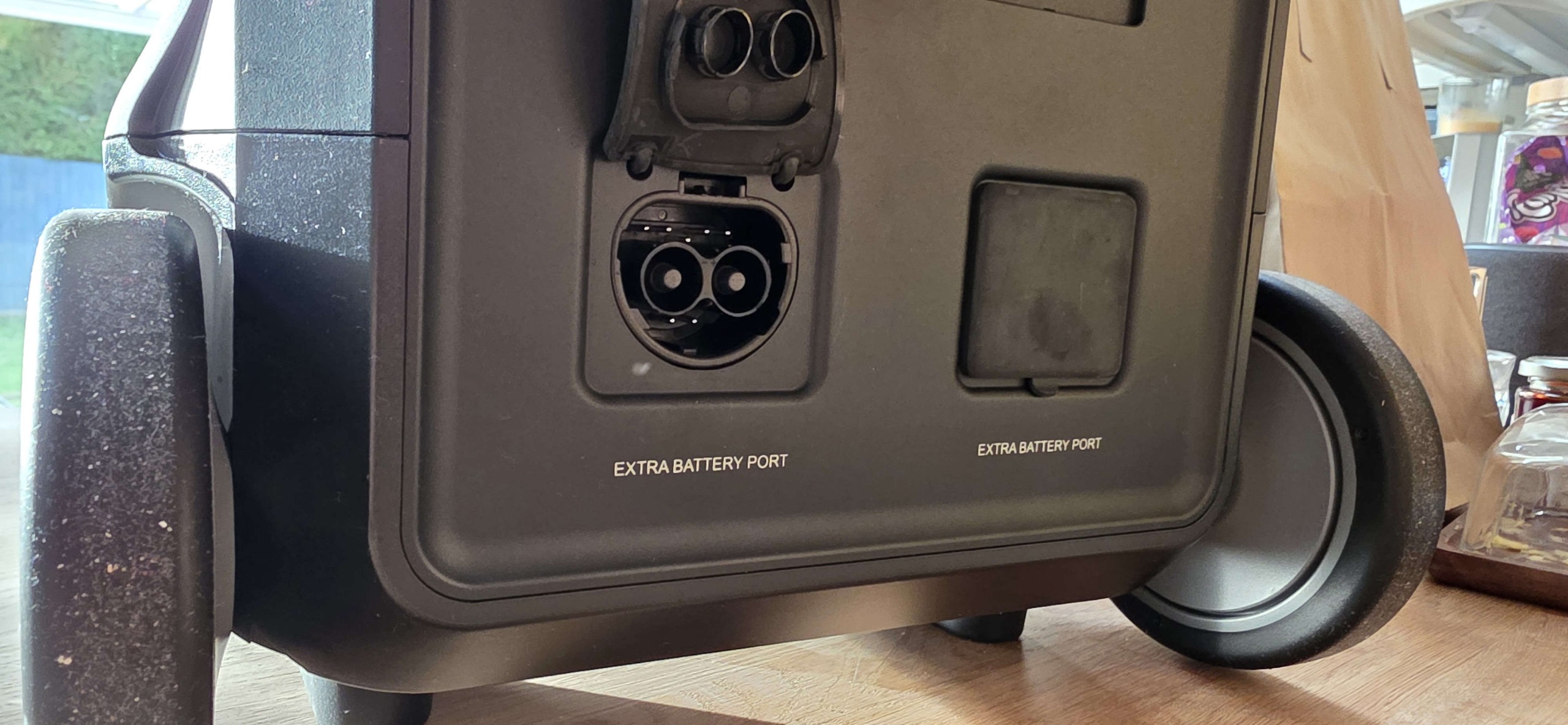
The built-in battery provides 3.84kWh of nominal storage. One optional battery increases this to 7.68kWh, and a second brings the total to 11.52kWh. The inverter’s output limit remains the same as capacity increases.
That makes expansion useful for longer backup periods. You can begin with the main unit and add storage if experience shows you need more runtime.
Space and cost deserve careful consideration before doing so. The P310 is already substantial, and additional batteries bring their own footprint and connecting cables. I’d establish how much energy the intended appliances use before committing to the larger setup.
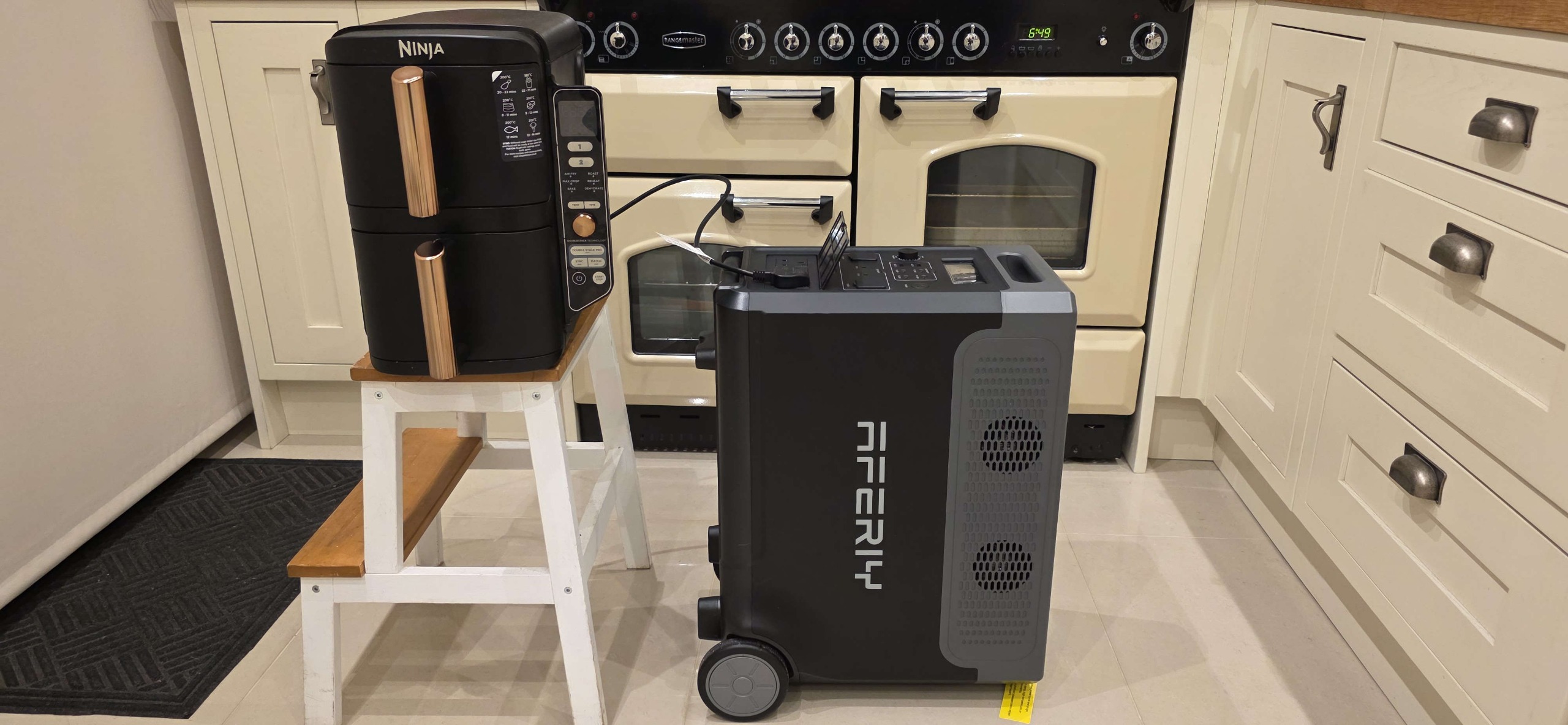
The P310 is worth considering for a workshop or home backup setup where capacity, output and future expansion matter. It supplied our air fryer at around 2.4kW, offers a useful spread of connections and lets you adjust mains charging from a physical dial.
Its shortcomings affect the experience of owning it. The UK socket layout makes moving it with equipment connected awkward, and the app’s account errors made setup unnecessarily frustrating. Standing it on its rear end improves cable clearance, while the physical controls make everyday operation less dependent on the software.
I’d be most interested in the base unit, with a suitable spot already set aside for it. The hardware has useful capabilities, but AFERIY needs to give the app—and the positioning of those UK sockets—the same attention.
My interest has been piqued by everything electronic since a young age, with a penchant for the dark art of tearing things apart. My daily duty is to marry software and hardware modules and I have to admit that this is much harder than cooking. When I’m not busy at work, I’m on the lookout for the latest and greatest hack! I am passionate about portable power generators (or power stations) as well as maker products such as the Raspberry Pi and any similar SBC (single board computers)