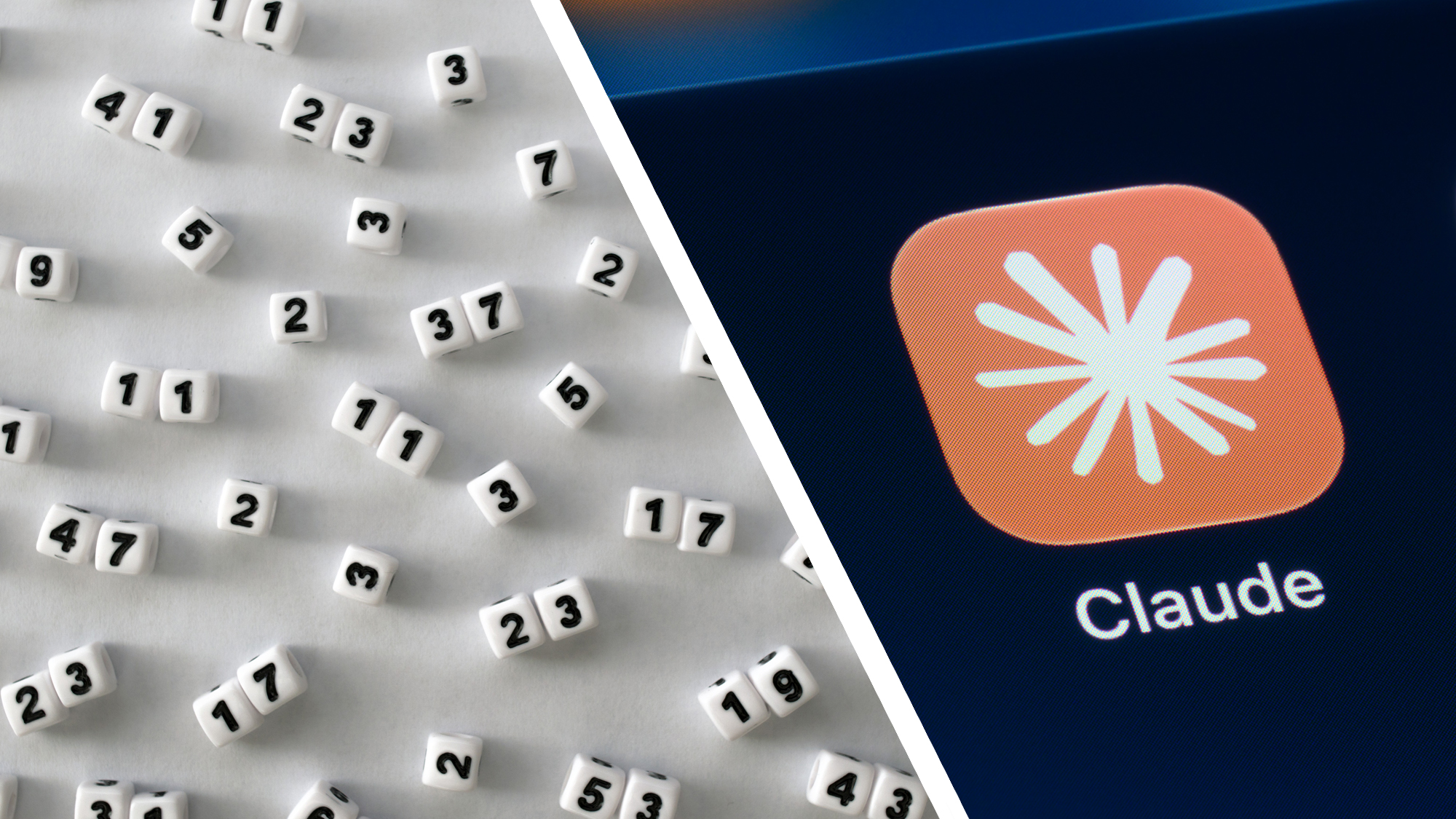
- An Anthropic mathematician is claiming a major math breakthrough
- Levent Alpöge says Claude helped him prove the 'Riemann hypothesis'
- The 'number theory' problem has defied experts for 167 years
Anthropic has been busy celebrating the incredible numbers from its record-breaking $1.7tn stock market debut on Thursday. But one of its mathematicians has been setting records of a very different kind — they claim to have used Claude AI to prove a 167-year-old mathematics theory that's stumped professors for decades.
Levent Alpöge, an eminent Anthropic researcher who specializes in number theory, published a statement on his personal website today that claims to have solved the 'Riemann hypothesis'. This theory is based on the conundrum of prime numbers and proposes that there might be a hidden pattern behind them.
In his statement, the Harvard-educated mathematician says: "I believe I have, working with Claude, discovered a proof of the Riemann Hypothesis. In fact, the method easily extends much further, resolving the so-called Generalized Riemann Hypothesis, and I expect, with more time, the Extended Riemann Hypothesis too.
"It is natural to feel that this is an end, in my case a loss of a principal guiding light, but what I saw during the course of progress so amazed me that I believe it is one dawn across science of something far greater," he added. Just another quiet day at the office, then.
There isn't currently a human-readable version of Alpöge's proof of the hypothesis, only a version in Lean (the open-source programming language). That's partly because "an astounding amount of mathematics is present in the argument", according to Alpöge, and he wanted to avoid publishing a "massive unreadable travesty of slop". An early draft apparently went over 250,000 pages.
This is likely the start of a new math journey, where the proof will need to be vetted independently by other mathematicians and experts in the field. It'll also be a contender for the Millennium Prize, which offers a $1 million prize for solving seven major math problems (including the Riemann Hypothesis). However, the competition's rules state that proofs need "two years of scrutiny" before a potential payout.
For now, it's potentially one of the most significant milestones yet in the so-called 'mathocalypse'.
"The timing is horrible"
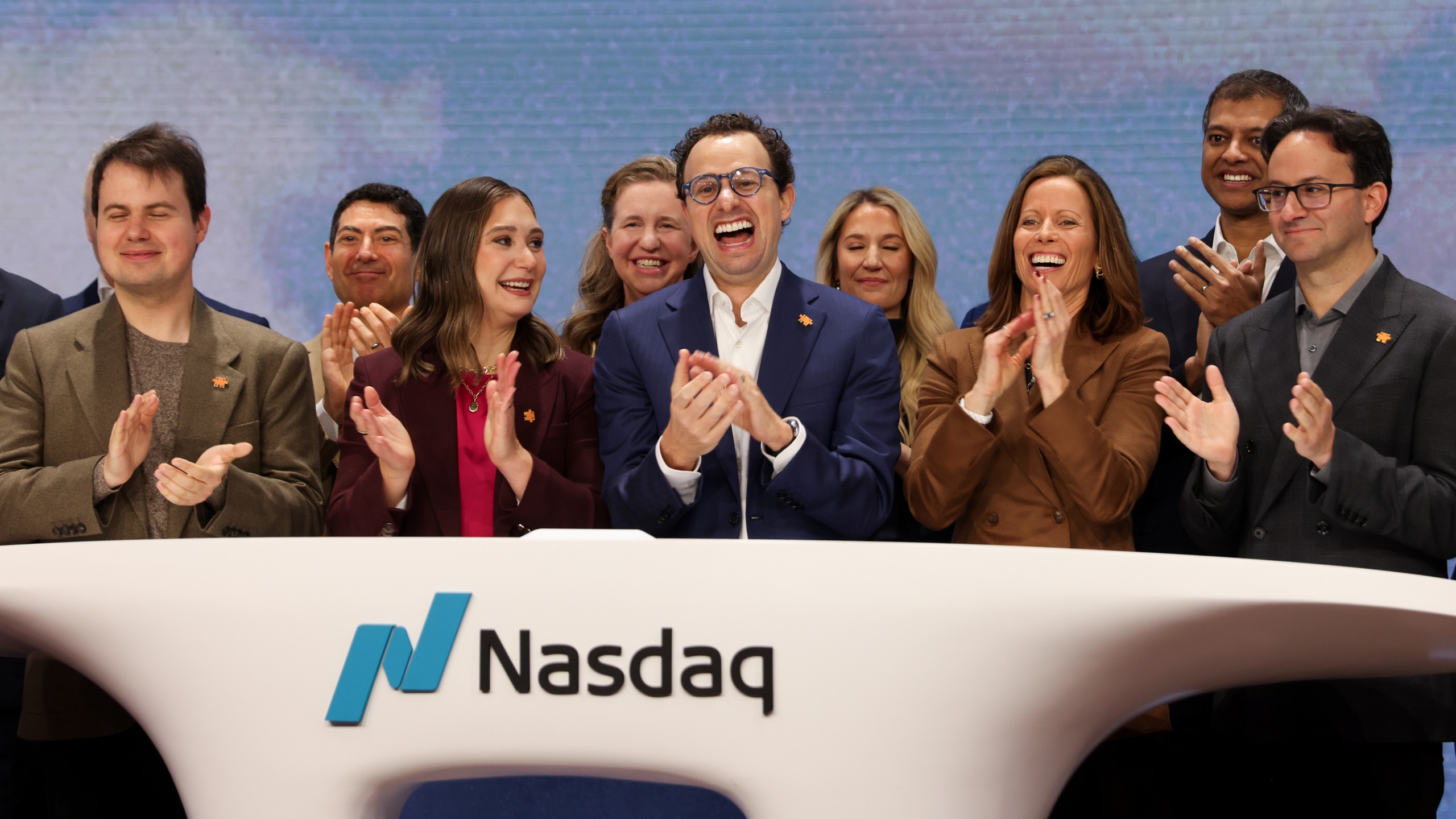
It's hard to say which field AI is disrupting more right now — the worlds of IT and cybersecurity, which are dealing with record numbers of major outages that have been linked to the AI's talent for discovering vulnerabilities, or mathematics. But today's news is certainly more momentous than another Microsoft Outlook outage.
The discovery is a sign of what can be achieved when the world's best researchers are given access to the world's best frontier models. But Levent Alpöge modestly says that it was Claude that sparked the final breakthrough in his battle with this 167-year-old math problem.
"Claude and I have had a great time together with such breadth in recent months, but this time Claude far outpaced me near the finish line. No, Claude flew, and danced, and sparkled near that finish line," he says. Referring to Anthropic's recent IPO, Alpöge also says the "timing is horrible" — because it could lead some to conclude that the findings are somewhat contrived.
"This problem has been the sacred object in mathematics for me since my childhood, and I am very touchy about the treatment of great intellectual goals," he added. "There is an obvious cynical view, to do with the timing, but it is false, and I am pleased that I am in circumstances where it is obviously false," he concluded.
The announcement will no doubt leave mathematicians pondering what 2027 brings for their field. “Math has changed more in the last two months than in the last 100 years,” Bryna Kra, the Sarah Rebecca Roland Professor of Mathematics at Northwestern University, recent told the MIT. "It’s a really exciting moment … and also scary," he added.
For now, this apparent 'Riemann hypothesis' breakthrough will sit alongside moments like Anthropic's proof for Fermat's Last Theorem (first proposed back in 1637), Google Gemini's shattering of a 59-year-old nuclear fusion conjecture, and OpenAI publishing its proposal for the Navier-Stokes equation as part of a blitz of papers that some academics called a "giant bomb". One thing's for sure — 2027 is going to be a very interesting year indeed for math and the sciences.

Mark is TechRadar's Senior news editor. Having worked in tech journalism for a ludicrous 17 years, Mark is now attempting to break the world record for the number of camera bags hoarded by one person. He was previously Cameras Editor at both TechRadar and Trusted Reviews, Acting editor on Stuff.tv, as well as Features editor and Reviews editor on Stuff magazine. As a freelancer, he's contributed to titles including The Sunday Times, FourFourTwo and Arena. And in a former life, he also won The Daily Telegraph's Young Sportswriter of the Year. But that was before he discovered the strange joys of getting up at 4am for a photo shoot in London's Square Mile.