Easy lid swaps earn praise from iFixit, but panel removal ends in cracks and USB-C repairs require logic board surgery
Apple's first touchscreen MacBook got a mixed reception from iFixit's teardown specialists, who praised its easily replaced lid but found fans and USB-C ports buried beneath the logic board.
The MacBook Pro with PROLED XDR display was unveiled at the end of October. It features a tandem OLED screen that stacks two layers of organic light-emitting pixels, eliminating the need for a backlight, and adds touch capability to the MacBook line for the first time.
Although the vendor was patted on the back in recent years for improving the repairability of its famously locked-down products, this machine shows Apple still has some way to go.
The good? The entire lid comes off relatively easily. Its three-screw hinges closely resemble those on the M6 14-inch MacBook Pro, while streamlined display cable brackets simplify removal.
Apple's Repair Assistant tool also handled a full system board swap well. Despite concerns about Touch ID fingerprint authentication, everything went relatively smoothly when iFixit paired a touchscreen from one machine with a logic board from another. On the first boot, Repair Assistant recognized the battery, display, and Touch ID sensor, and touch control needed no separate calibration.
The bad? Replacing the panel alone is not possible. When iFixit tried to separate it from the lid, the glass delaminated, cracking the OLED and touch-sensitive layers beneath. That could make for a costlier repair than bargained for.
Under the bottom cover, the PROLED has a similar internal layout to the last few models of MacBook Pros, with the fans, board, speakers, and trackpad all in the same places.
That means the same annoyances persist. The MagSafe power connector can be removed via two screws and a bracket, yet the USB-C ports can't be extracted the same way because the logic board is in the way. The headphone jack and the fans also require removing the system board first, and the HDMI port and SDXC card reader are soldered to the board itself, as is the storage and memory.
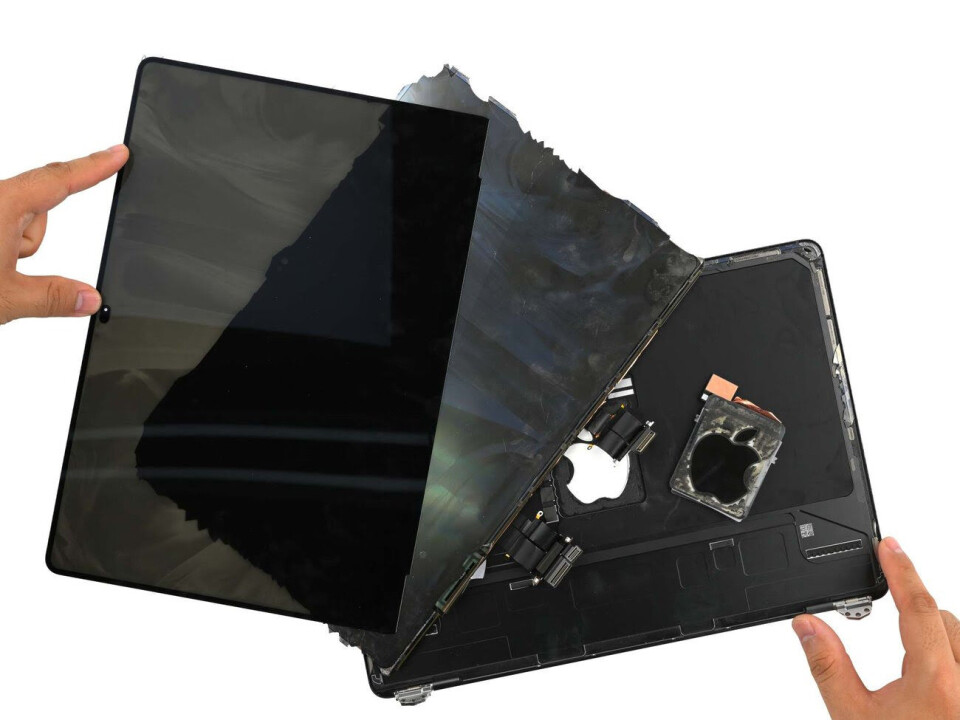
Another gripe is that this MacBook's battery pack is hard to remove, though at least it is removable, unlike in many thin-and-light laptops. The tested Pro weighs 1.38 kg or about 3 pounds.
For these reasons, the MacBook Pro with PROLED XDR display earns a 5 out of 10 repairability score from iFixit, but this is actually a one point increase over the score it gave the M5 MacBook Pro.
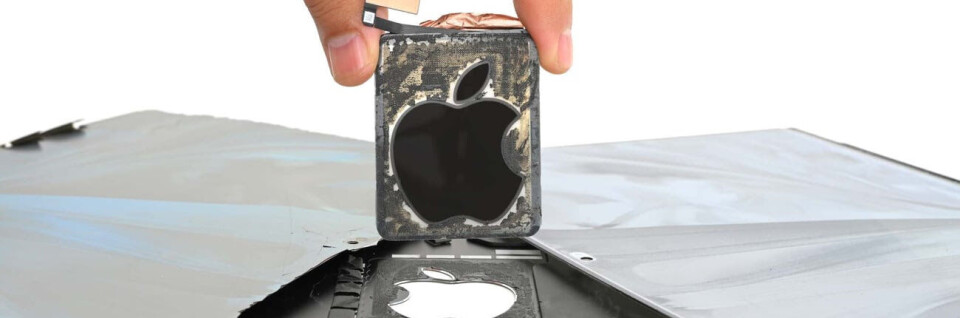
The Apple logo has its own lighting. Older MacBooks with illuminated logos borrowed light from the LCD backlight shining through an apple-shaped window in the lid. This model uses a strip of LEDs along one edge of the logo, passing through a diffuser for an even glow. Because it sits behind the display panel, it would be nearly impossible to repair if it failed, especially if the panel is destroyed during removal.
Under a microscope, the PROLED XDR display looks very different from earlier MacBooks: the blue subpixel is significantly larger than the green and red ones.
The reason, we're told, is that blue OLED materials wear out faster, so a larger subpixel can emit the same amount of light while putting less strain on the material. ®