Few wildlife spectacles in the UK are quite as impressive as watching a peregrine falcon dive towards its prey or a white-tailed eagle soar above the Scottish coastline.
Many of our birds of prey have made remarkable recoveries in recent decades, following historical declines caused by shooting or poisoning, as well as exposure to environmental pollutants.
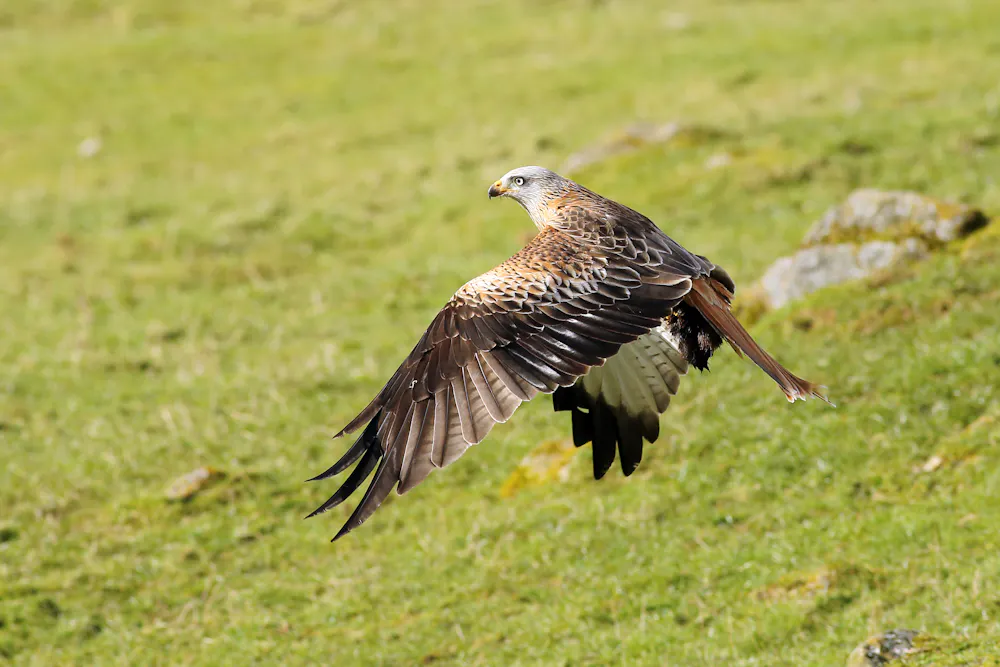
The red kite, once confined to a small part of Wales, is now a familiar sight across much of Britain. But as our climate changes, these birds face a new conservation challenge.
My new research, published in Frontiers in Ecology and Evolution, suggests that climate change could substantially alter which parts of the UK provide suitable environmental conditions for breeding birds of prey. However, what could be good news for some species may be considerably less encouraging for others.
Like all wildlife, birds of prey have particular environmental requirements. Temperature and rainfall can influence where they live, when they breed and the availability of the animals they feed on.
To investigate how our birds of prey might respond to future climate change, I used computer models to estimate changes in environmental suitability for 16 species that breed in the UK, including eagles, falcons, hawks and owls.
By combining records of where these birds are currently found with information about their environment, I explored how suitable conditions might change over the coming decades. I considered several different projections of our future climate to account for some of the uncertainty surrounding these changes.
What struck me most was just how differently individual species could respond to the same changes in climate. The peregrine falcon is the world’s fastest animal, reaching speeds of more than 186 mph (300km/h) while diving for prey.
The falcon could see a considerable expansion in environmentally suitable areas across the UK. Under a high emissions scenario, my models projected an average increase of around 74% by the 2070s.
For other species, however, the picture looks rather different. My research suggests that the white-tailed eagle, short-eared owl, red kite and merlin could all experience reductions in suitable habitat. Under the same emissions scenario, the short-eared owl could experience a reduction of suitable area of around two-thirds.
The reliability of my models also varied between species, meaning that some projections, including those for the peregrine falcon, should be interpreted with caution.
These contrasting projections highlight an important challenge for wildlife conservation. Even species that occupy similar ecological roles and live in the same country may face very different futures.
A changing landscape
Of course, identifying new areas of environmental suitability does not necessarily mean that birds of prey will move into them. A peregrine falcon will still need access to suitable nesting sites and sufficient prey to establish a breeding territory.

Equally, a projected reduction in the suitable conditions does not necessarily mean that a species will disappear from an area. Animals may be able to adapt to changing conditions in ways that computer models cannot fully capture.
Climate change may also affect birds of prey indirectly. Changes in the abundance and distribution of their prey, from small mammals to other birds, could have important consequences for these predators.
Understanding these complex ecological relationships will be an important next step in predicting how birds of prey might respond to a changing world. Conserving our future birds of prey
Much of our approach to wildlife conservation involves protecting species in the places where they are currently found. But what happens when the environmental conditions that make these places suitable begin to change?
Public monitoring
Identifying areas that could remain suitable for birds of prey, as well as those that might become suitable in the future, could help inform longer-term conservation planning.
Cutting greenhouse gas emissions is essential, but so too is addressing the existing threats faced by our birds of prey. Illegal shooting, poisoning, and collisions with buildings and vehicles continue to threaten these birds.
Reducing these human pressures could help build healthier, more resilient populations that are better equipped to cope with environmental change.

Continued monitoring is also essential – and this is where the general public can play an important role. Whether you are watching a red kite from your garden or spotting a kestrel while out on a countryside walk, you can record your wildlife sightings through citizen science platforms such as iNaturalist or BirdTrack. This can help scientists build a clearer picture of how bird distributions are changing.
These observations provide valuable data for future research, helping scientists assess whether wildlife is responding to climate change in the ways that computer models predict.
The recovery of many of the UK’s birds of prey is an important conservation success story. Ensuring that these recoveries continue in a changing climate will require us to think not only about where these birds live today, but also about where they might be able to live tomorrow.