The recent failure of the UN climate summit, Cop31, went beyond already gloomy expectations. Yet this political and diplomatic catastrophe may become a historical opportunity for global climate governance to tackle its structural problems.
It is a miracle that Cop climate summits have survived and grown for 31 years, with all decisions needing unanimous consensus from all 195 nations or parties. Cops have produced some positive results such as the 2015 Paris climate agreement to cut greenhouse gases. But now it’s time for radical reform. A reform that must not only abolish unanimity, but also make the Cop capable of engaging a strong enough coalition of interests to advance the climate change agenda.
Where could that start? What kind of alliance does such a reform need? A recent conference on the global governance of climate change provides some answers.
Ending unanimity
Cop has probably been killed by a contradiction. The first Cop in 1995 – chaired by Angela Merkel, then Germany’s young environment minister – was regulated by a UN law. This was the Framework Convention on Climate Change, which envisaged that decisions had to be taken by consensus or, if that wasn’t possible, by two-thirds of the parties (each state of the world is a “party”). This law, known as draft rule 42, was never accepted or rejected, leaving Cop trapped in the unanimity trap.
In 2010, this was enough for Bolivia alone to object to risk derailing the entire negotiation. It is a trap because countries have naturally different interests. Most developing countries are highly exposed to climate change and do not contribute much to the problem; some others not only benefit from oil production but also from global warming itself (notably Russia, as Arctic trade routes open up due to ice melting).
Most other traditional UN institutions do not operate under such strict consensus: the General Assembly (the main policymaking body of the UN), Unesco (the UN’s Educational, Scientific and Cultural Organisation) and the World Health Organization all vote with a qualified two-thirds majority on important matters.
So unanimity must be abolished. But that is not enough. Cop also manages to be both inefficient and not inclusive enough of the actors that matter a lot in achieving the goals of a climate change agenda. The parties include the tiny country of San Marino yet there’s no representation from megacities like Mumbai or Seattle – cities which may be exposed to climate disaster and host some of the solutions.
A new annual conference called Transitioning Away from Fossil Fuels was a significant attempt to move beyond the Cop gridlock. In 2026, 57 countries joined the first meeting in Santa Marta, Colombia after realising at Cop30 last year in Brazil, that, by “consensus”, Cop cannot even agree on the need for a roadmap to end dependence on fossil fuels. And yet even shrinking the number of parties to a quarter of Cop’s total was not enough to get beyond the acknowledgement of such a necessity: the final document did not indicate any timeline nor commit countries to specific targets.
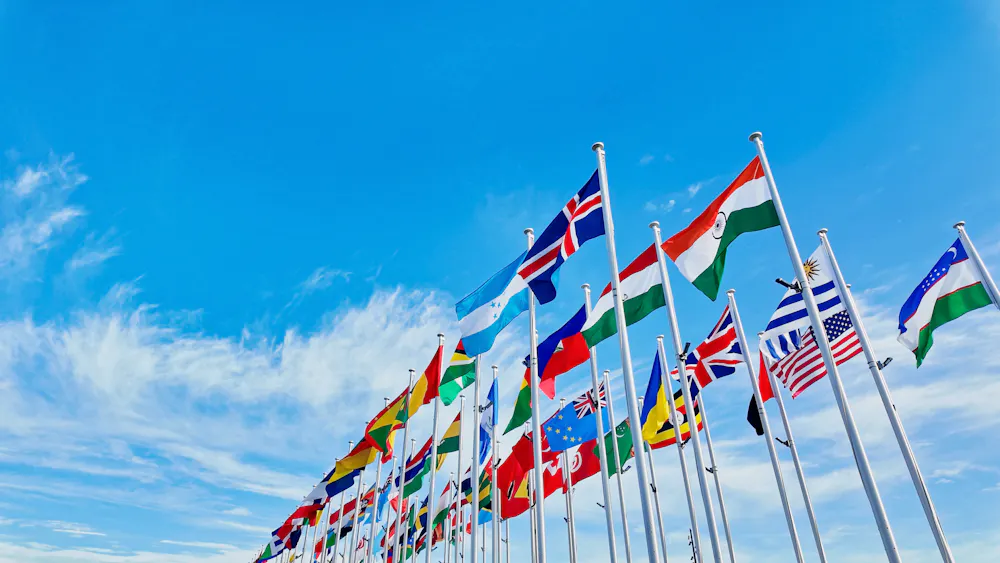
It is too early to say that the Santa Marta process won’t work. But I would argue that it was a mistake not to invite certain nations, namely India and China and the US (although representatives from California did attend).
It was also risky to start the conference with a declaration (issued by Colombia’s then president, Gustavo Petro about the inadequacy of capitalism to stop climate change. Capitalism may be a form of governing economy as primitive as fossil fuels, but to start from such a principle unnecessarily alienates leaders of other countries and business.
Coalition of the willing
Another way to bring together countries and political sides that may have different visions of the world yet share common energy interests is to invite all countries that may respond positively to two simple questions: “Are you interested in developing within two years and sharing your plan to reduce in your country (or city or region) the percentage of energy consumption coming from fossil fuels? If so, are you willing to support each other in building the necessary supply chains and financial facilities to improve that target?”
This may inspire politically diverse local and national governments and business leaders to gradually join what would become a concrete problem-solving exercise. Common ground could hopefully be found in their shared interest to reduce energy dependency and mitigate climate risks.
Read more: What does climate adaptation actually mean? An expert explains
Once most of the net importers of fossil fuels are aligned, the net exporters (including some members of Opec, the oil producers’ cartel) may also commit. This is the sort of coalition of the willing that we need: an alliance capable of increasing its scope and delivering results.
As director of the thinktank Vision, I recently convened the fifth conference on global governance of climate change, held in Venice, Italy, in October 2026, titled Beyond Cop. Over three days, international delegates produced a strong proposal on how to reform Cop. The proposal was authored by professors and students including Kalypso Nikolaidis, chair in global affairs, and Helena Marchall, a masters student, both at the School of Transnational Governance of the European University Institute.
The conference proposes looking beyond ideologies, pre-defined agendas, cognitive biases and siloed thinking that make it difficult for politicians, business and academics to solve complex questions. One suggested change is to make Venice a permanent hub for a new global governance of climate adaptation (the practical steps to prepare for the consequences of a changing climate). This would help drive action and avoid the risk of focusing primarily on mitigation (cutting greenhouse gas emissions to achieve net zero).
We need courage, vision and pragmatism. These are the ingredients to respond to existential threats.