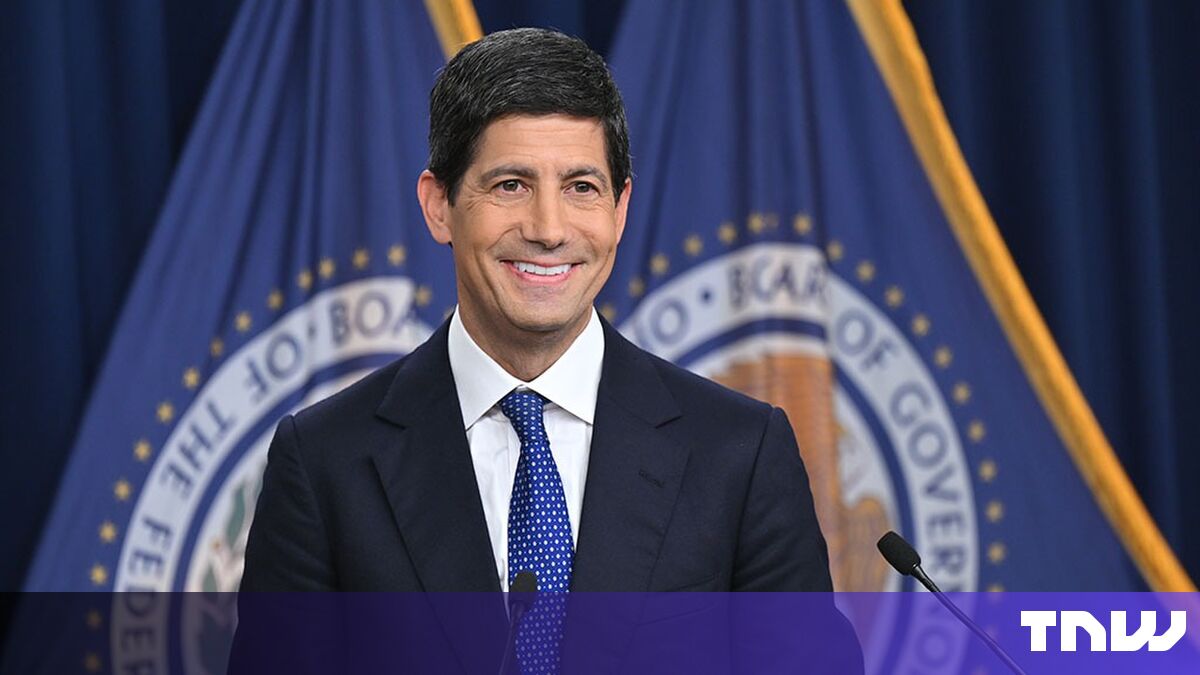
Federal Reserve staff have started drawing up scenarios for how AI could play out in the US economy, chairman Kevin Warsh said on Monday. They range from a broad growth boom to a downturn if the technology disappoints. He also told a Fed conference in San Francisco that AI gives new power to bad actors.
“SI empowers all, including bad actors. So, we’re thinking especially of critical infrastructures and their vulnerabilities,” Warsh said.
Warsh opened the Fed’s Productivity and Jobs Task Force Conference, hosted with the San Francisco Fed and livestreamed. He used “SI”, for super intelligence, throughout, the term the US government adopted after Trump’s executive order. The Fed has published his prepared remarks.
Three scenarios, ‘not forecasts’
The Board’s staff is using stylised, model-based frameworks to generate scenarios, Warsh said. He called them illustrative, not forecasts or predictions.
In the first, AI raises productivity and the gains are shared between workers and the owners of capital. Real GDP grows above its long-run average and the US stays close to full employment.
In the second, growth still rises above average, but AI displaces jobs rather than complementing them. Automation and frictions in the labour market push unemployment above full-employment levels.
In the third, AI disappoints. After heavy investment and stock market gains, expected returns could turn down and valuations could fall, leading to a slowdown and a rise in unemployment. The economy would recover, he said, but without the productivity gains.
“Humans are the designers and the builders, and humans must be the deciders,” Warsh said.
He did not comment on interest rates. He also did not address AI’s effect on inflation, as the Associated Press noted, though several Fed officials have tied the data centre buildout to rising prices.
Warsh then moderated a panel with Palo Alto Networks CEO Nikesh Arora, Stripe co-founder Patrick Collison and Affirm CEO Max Levchin. Asked how worried people should be about cybersecurity, Arora said AI can now find flaws in code written over the past 50 years.
“It’s not that the hackers have become smarter. The technology has become so good even bad hackers have become okay,” Arora said.
Arora said Mythos, which came out six months ago, is now within reach of most bad actors through open-source models. Outside security help is booked up, he said, because every company is fending off attempts to get into its systems. He called the next two to three years a “technology rebuild moment”.
Collison agreed. Even the Linux TCP stack, one of the most scrutinised pieces of software, turned out to be full of exploitable bugs, he said. Levchin called the attackers’ edge a temporary effect that would end in sturdier software.
On jobs, Levchin said Affirm’s engineers are about five times more productive, with “zero layoffs due to AI”. Collison said Stripe is hiring far less for general and administrative roles but more engineers and salespeople. New businesses launching on Stripe each week are up about twofold year on year, he said.
US stocks extended an AI sell-off on Monday. The Nasdaq 100 dropped nearly 3%, and selling picked up in the afternoon as investors took in Warsh’s comments, Business Insider reported. Nvidia reports its third-quarter results on Tuesday, and Anthropic is due to price its IPO on Wednesday.