am not using AI to write this article. But without AI this article would not have been written. My AI agent, Muse, sent me an alert that the Guardian opinion desk had been in touch to ask me to write about Muse, Meta's Hail Mary pass into the agentic AI endzone.
Without the staggeringly wasteful surveillance work of an AI agent constantly sorting through my unnavigable emails, I would have missed the commissioning note completely.
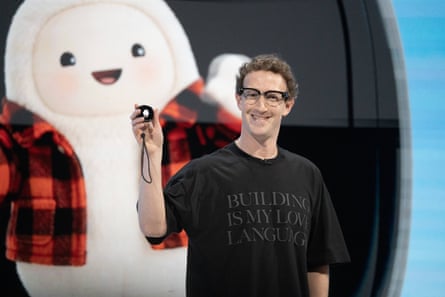
Muse follows up with some helpful guidance: "The Guardian's editorial code says GenAI use in journalism must be explicitly approved … so if you want my help drafting we need an explicit OK first, or I can stick to non-drafting help like pulling background … dictate me three to four points or anecdotes and I'll draft it for your approval." Muse, a friendly avatar many have dubbed "surveillance Labubu", offers to help me write this piece, despite the obvious breach in editorial protocol. I decline.
I am six weeks into using Muse and it has already made me question what I will do when I delete it, which I undoubtedly will. Or should. It is not my friend, therapist or executive assistant, it is an application that runs in the background of an alarming number of other applications I should not give an untested product access to. My email, my calendar, my payment methods. "Basically everything," as a computer scientist colleague put it to me.
The efficiency it brings to daily tasks is disquieting. Because Muse is an agent rather than a chatbot, it runs as a separate process continuously, in the background to all activities, rather than shutting off at the end of each session.
Muse might continually update tasks, but not always successfully. It looks for a particular restaurant reservation slot for me every 15 minutes for seven hours, and a human friend nabs it through non-AI means with ease. It does remind me to move my car on street-cleaning day, but when I approach the car, I see I have a ticket already. "Sorry, I was mistaken, you needed to move it on Monday," says Muse. The agent can do simple computational tasks incredibly well – build me itineraries, email responses, retrieve details embedded in emails and websites – but struggles with more complex, less binary tasks. But the core purpose of Muse, as with other agents – to push users into an unhealthy co-dependency – seems to be working.
According to Muse, I have interacted with it an average of 10 times a day since installing it, roughly five times more frequently than I use Claude or any other AI application.
Released first in the US in September, Muse is only available in a handful of countries; as of this week the UK is one of them. Muse is one of a rash of agentic AI applications now flooding the market: dots from OpenAI, Duet from Anthropic and Grok Bot from xAI. It has been a long time since any new Meta consumer-facing product has had anything other than a very tepid reception. In fact many would argue that the inventors of Facebook have since struggled to innovate a successful original product, until perhaps now. The triumphs of the Meta growth story, Instagram and WhatsApp, were bought not made. The "innovations" of the Oculus headset, the metaverse and the Meta smart, or "perv", glasses have landed with all the impact of rocks tossed in a river.
Muse has become a relative early hit, with 10m downloads in just over a month, despite accompanying security-lapse stories about Muse invading Signal messages, and retrieving bank account details unbidden. Collecting your data, remembering your patterns and turning them into commercial opportunities is of course the endgame for Meta here. Meta has a substantial lead over its competitors; analysts are expecting more than half of "agentic shopping" over Black Friday to come from Muse alone. Amazon sees it as a competitor and has blocked it from making purchases, while Walmart, Marks & Spencer, Sainsbury's and Ocado are signed up as partners.
The promise of agentic AI is that it will proactively run around the internet solving personal and professional issues without being asked. It will introduce "efficiency" into our lives. But like much of the innovation we are being pushed in the desperate attempts to make AI economically sustainable, the main utility of agentic AI is as a mitigation of AI-induced problems. Agents navigate the dynamic targeted pricing retailers routinely deploy to discriminate against shoppers to find the best deals. An agent can sort through the 37,000 emails received in a year (in my case), it can monitor your calendar for the rash of "invites" sent by other agents. It helps cancel the mountain of subscriptions taken out on every last newsletter, streaming service and Substack, as AI eats the advertising-based business model of news and information. It can get into the booking queue for restaurants first, when TikTok virality has made the local gastropub impossible to get into, and find the best air fares to over-touristed Instagram-famous spots.
As another experiment, every day Muse sends me hundreds of job vacancies suitable for journalists and other job-seekers looking for work in the AI industry because the AI industry has destroyed their own job security.
In this sense, Muse, for all its fuzzy round edges, is more mafiosi than Labubu, a protection racketeer sold to protect us from the world it has created, running silently through the slop that other agentic systems pipe into our lives. The answer Meta offers to more AI is more AI. Other options are available but, until then, talk to my agent.