Sequent, a London startup that uses mathematical proof to show software obeys its safety rules, has raised $2.2M in pre-seed funding. Frachtis co-led the round with Metaplanet, the investment firm of Skype co-founder Jaan Tallinn, the man who led Anthropic’s 2021 Series A.
Its product, Alan, goes after what testing cannot do. A test checks the cases someone thought to try, while a formal proof shows the code follows its rules in every case. Writing proofs by hand takes specialists months or years, which has kept the method locked up in fields like aircraft controls.
AI has changed that maths, as the models suit the repetitive grind that proofs demand. With Alan, engineers state their safety rules in plain language, such as no user being able to withdraw more than their balance.
The AI then hunts for the proofs, and a separate checker called HOL4, which uses no AI, confirms every step or throws the proof out.
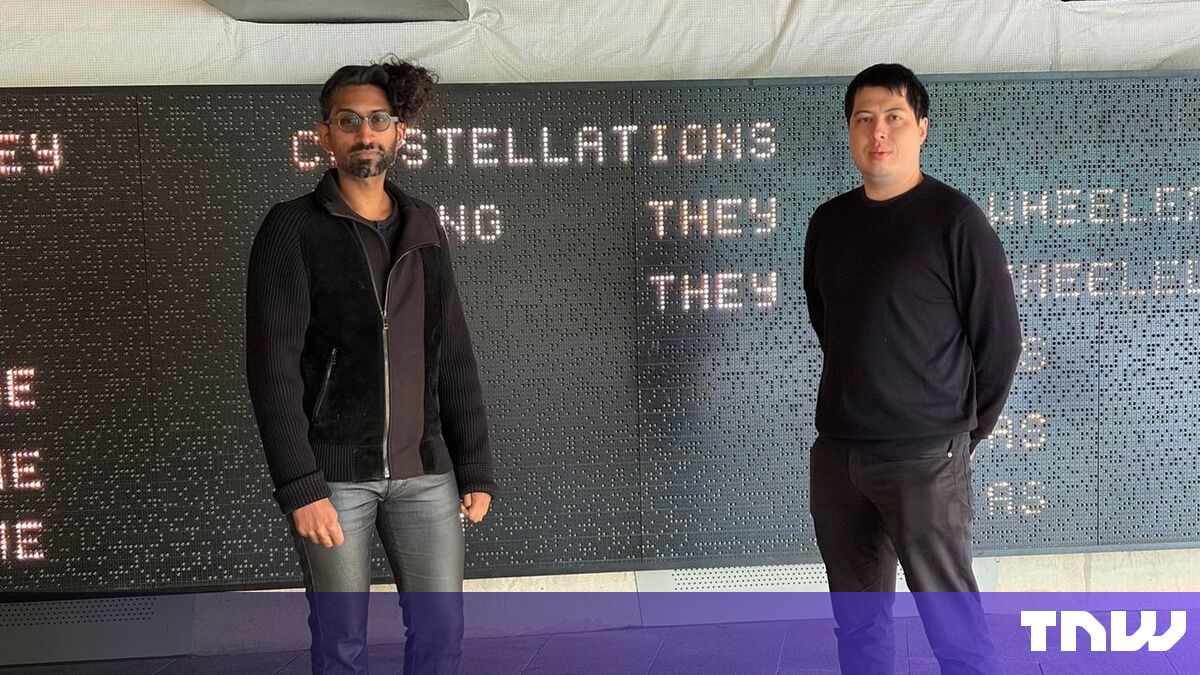
The company was born from a costly mistake: the CEO, Charles Cooper, who leads Vyper, one of the two main programming languages on Ethereum, in 2021 he accidentally introduced a flaw into its compiler. In July 2023, attackers used that bug to drain more than $60mn from older pools at the exchange Curve and other projects.
After the attack, Ramana Kumar, a former Google DeepMind safety researcher, offered to help prove the compiler correct. He had formed, having co-created CakeML, a compiler proved correct down to the instructions a computer runs, and the work grew into Sequent, where he is now CTO.
Curve has become the first paying customer. For one type of its pools, Alan has proved that no user can take more than a set limit from depositors, whatever they do and in whatever order.
Whenever the pool’s code changes, “we can prove depositors’ money stays protected by the same limit,” Curve CEO Michael Egorov said in a statement.
Cooper argues the lesson reaches well beyond crypto. Banks and governments have long leaned on keeping their old code private, he says. AI-powered attacks are eroding that shield, while cheap proofs hand the advantage back to defenders.
Crucially, AI never gets the final word. At DeepMind, Kumar studied how AI finds shortcuts that satisfy a rule’s letter while missing its point. So engineers sign off on every rule themselves, and each proof must pass HOL4, whose core is small enough for experts to inspect line by line.
Alan works on Vyper smart contracts today, with Solidity and Solana support in development and Rust, C, TypeScript, and Python on the roadmap. Early access starts at $99 a month, and the founders’ next target is the Vyper compiler itself, the place where the original flaw lived.