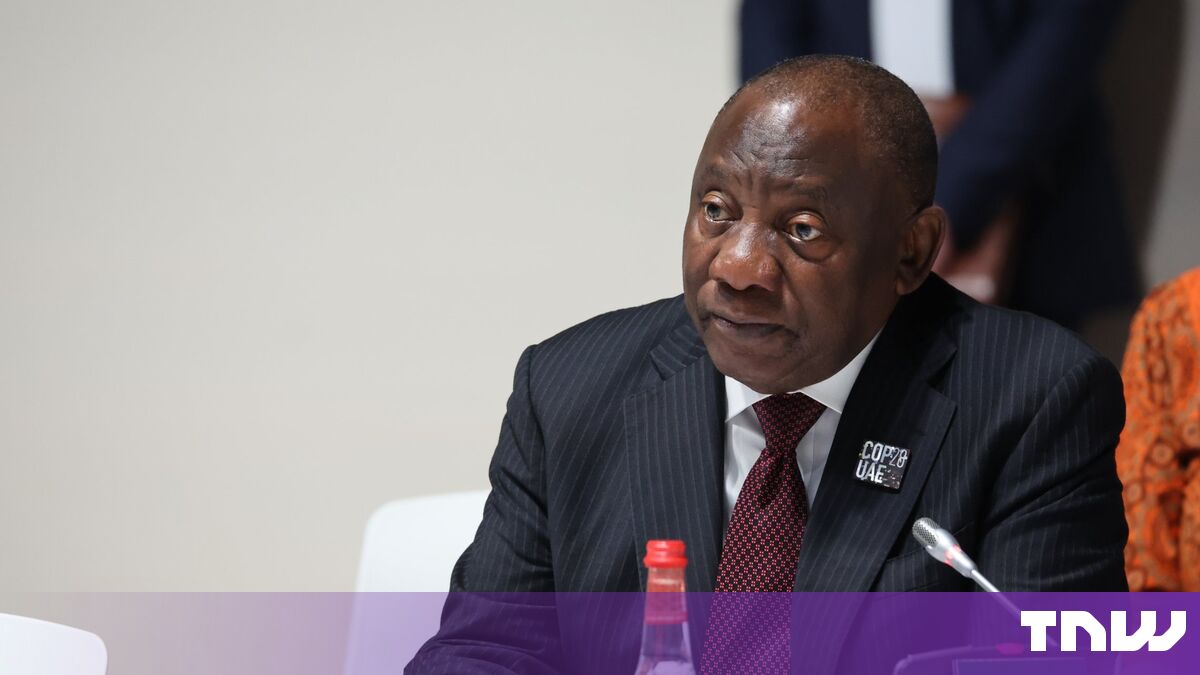
Elon Musk’s difficulty with South Africa’s ownership policy is what keeps Starlink out of the country, President Cyril Ramaphosa said on Monday. He was speaking to ABC News’ Jonathan Karl at Semafor’s Silicon Valley & The World event in California.
“All countries have policies in terms of how they admit companies to operate. The United States has the same,” Ramaphosa said. “When you want to come and operate here, you’ve got to subscribe to the policies of the country.”
South Africa’s telecoms law sets at least 30% ownership by historically disadvantaged groups for individual licences, TechCentral reported. SpaceX has refused to give up 30% of its local operation, so Starlink’s entry has stalled.
Communications minister Solly Malatsi told Icasa in December 2025 to consider equity-equivalent investment programmes instead. In May 2026, Icasa said it could not fully apply that direction without a change to the law. On 9 November, business group Sakeliga asked the Pretoria high court to set Icasa’s decision aside, according to TechCentral.
Musk grew up in South Africa. He has called its rules “openly racist ownership laws”, in a February 2025 post on X. Karl said Musk has also accused Ramaphosa of building an apartheid 2.0.
Ramaphosa said Musk is conservative by nature and does not fully understand what apartheid did to Black South Africans. The apartheid government spent 12 rand on Musk’s education for every one rand it spent on his, Ramaphosa said.
“If one does not understand that, one will never be able to understand precisely what needs to be done to remedy the harm that was done,” he said.
Ramaphosa said there had been talk of a meeting with Musk on this trip, but their diaries had not matched. He said Musk’s brilliance had awed him in the past.
“Even as one is a citizen of a new country, you should still be loyal to your old country,” Ramaphosa said.
Musk owes what he has become to his education in South Africa, Ramaphosa added. He should give back to the country, he said. Karl also noted that Musk had been involved in the US midterms, where his candidates lost almost everywhere.
An ‘ambush’ at the White House
Ramaphosa called his Oval Office meeting with Donald Trump an ambush. Trump showed him videos there that he said were from South Africa. He said Trump was seriously misinformed, because the video and press clippings did not show South Africa.
“We are Nelson Mandela’s children and we respect the human rights of everyone. Black, white, everyone,” he said, adding that there is no white genocide in South Africa.
He said falsehoods have shaped how the US relates to South Africa. He and Trump have not spoken since that meeting.
US voters have pushed back against AI data centres, and ballot measures rejected them. South Africa has had the opposite experience, Ramaphosa said. The country is home to almost 70% of the data centres built on the African continent, he said.
His biggest worry about AI is technology out of human control, he said. He raised the point at the BRICS meeting in India. He said he agreed with AI leaders who call for global guardrails, and warned against autonomous weapons making decisions.
Ramaphosa said he would hold meetings with OpenAI, Anthropic, Microsoft, and Google, and with their investors. His delegation of nearly 300 people includes ministers, South African tech firms, and students. He wants more US companies to join the 600 already operating in South Africa.