“I would ask you to please reach out to Roscosmos directly.”
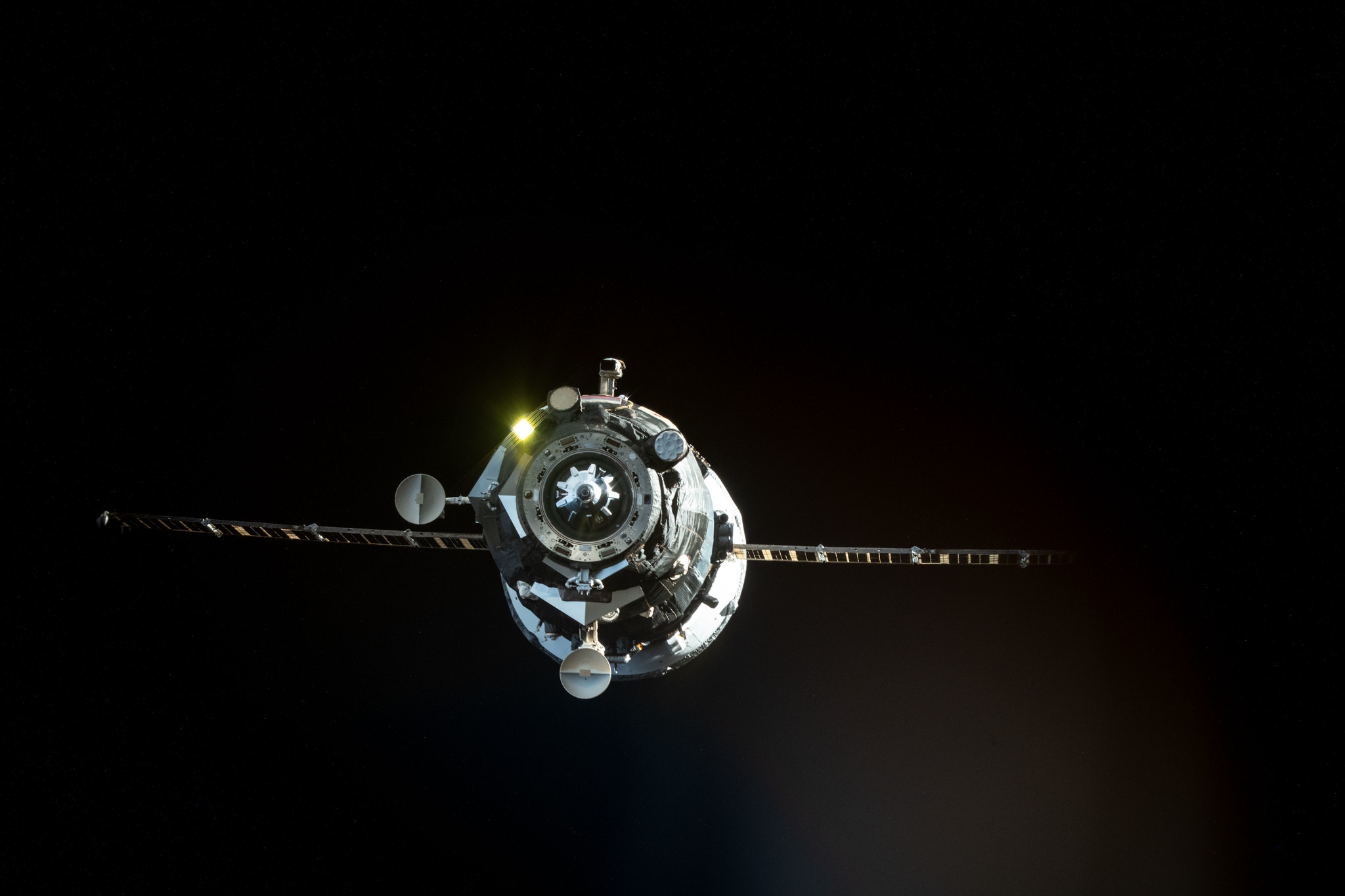
It was the most simple of questions. On Monday afternoon, during a NASA news conference about the International Space Station, Space News reporter Jeff Foust asked about an upcoming launch of a Russian spacecraft.
“It’s my understanding there’s another cargo mission going to the ISS this week, a Russian Progress,” Foust said. “Can you confirm that, and give the date and time that will launch?”
This Progress MS-36 cargo launch, mind you, is presently scheduled for fewer than 16 hours from now, at 10:13 UTC (05:13 am ET) on Tuesday. It is going to a space station co-operated by the US space agency. But no, NASA would not provide this basic information about the upcoming Progress launch.
“Regarding the Progress launch, I would ask you to please reach out to Roscosmos directly for any questions tied to that vehicle,” said the senior NASA official on the call, Gaurang Patel, operations integration manager for NASA’s Low Earth Orbit Program.
Effectively, this is a “Go f- yourself” response from NASA. Roscosmos typically does not reply to Western media outlets, and everyone knows this.
So why is a bog-standard Progress launch suddenly a state secret? It seems to be a recent policy change, because, historically, NASA has televised every one of these cargo flights from Russia’s main spaceport in Baikonur, Kazakhstan. But there is no information about the upcoming launch on NASA’s television schedule for upcoming “live” events.
As recently as September, NASA provided live television coverage of Progress launches from Baikonur. It even issued a media advisory promising to update its broadcast schedule once Roscosmos provided launch details. Two months later, NASA officials apparently are unwilling to confirm that another Progress launch is taking place.
Who made this decision?
The question is whether this decision was made by NASA or was a request from Roscosmos, and, ultimately, whether any of this matters. We can make some educated guesses.
It is probably safe to surmise that the decision here was originally made by state-sponsored Russian space corporation Roscosmos. The company has not been advertising the preparation of the Progress spacecraft as it customarily does, some local sources say. Russian space reporter Anatoly Zak confirms that Roscosmos has “dramatically curtailed” its coverage of all launch campaigns in recent months. There is no mention of the launch on Roscosmos’ Telegram channel.
So why is Roscosmos doing this? There are some novel aspects of this flight. Among the cargo being brought to the space station is a robot that was created to assist spacewalkers during extravehicular activities. Operated by humans, the human-like “Teledroid” is designed to operate in a vacuum, exposed to radiation. Surely nothing will go wrong with this.
This is also the first launch of a Progress spacecraft since NASA and Roscosmos agreed that the leaky PrK module on board the space station would be decommissioned. Zak reports that, as a result, the Progress spacecraft will first dock to the Poisk module, where it will be unloaded. It will then be moved from there to the docking port attached to the PrK module to provide propulsion for the space station. Docked there, the ship’s propulsion system is better aligned with the station’s main axis.
But none of this likely is the cause of secrecy surrounding Tuesday’s Progress launch. Rather, more likely it is due to Russia’s ongoing war against Ukraine.
Worried about Ukrainian drones?
Ars reported earlier this year that, after a spaceport in northern Russia came under attack from drones on multiple occasions, the Russian government put a tighter lid on information about its launches from Plesetsk. It now seems likely that Russia has extended this secrecy policy to other missions at other spaceports.
For example, earlier this month, Russia launched a Soyuz rocket from the Vostochny Cosmodrome without publicly announcing its precise launch date and time beforehand. Roscosmos confirmed the mission only after liftoff, and independent observers had to rely on local government notices to determine when the launch would occur.
Through all of the geopolitical turmoil on Earth, NASA has sought to maintain a good working relationship with Russia. Most likely, then, NASA has gone along with Russia’s secrecy policy for this week’s cargo launch—absurd though it appears in a culture of transparency.
Nevertheless, this kind of secrecy would seemingly be untenable with a crewed launch involving NASA astronauts. The next test of this will come in March 2027, when the Soyuz MS-30 mission carrying three astronauts, including NASA’s Deniz Burnham, is due to lift off from Baikonur. We’ll be watching.