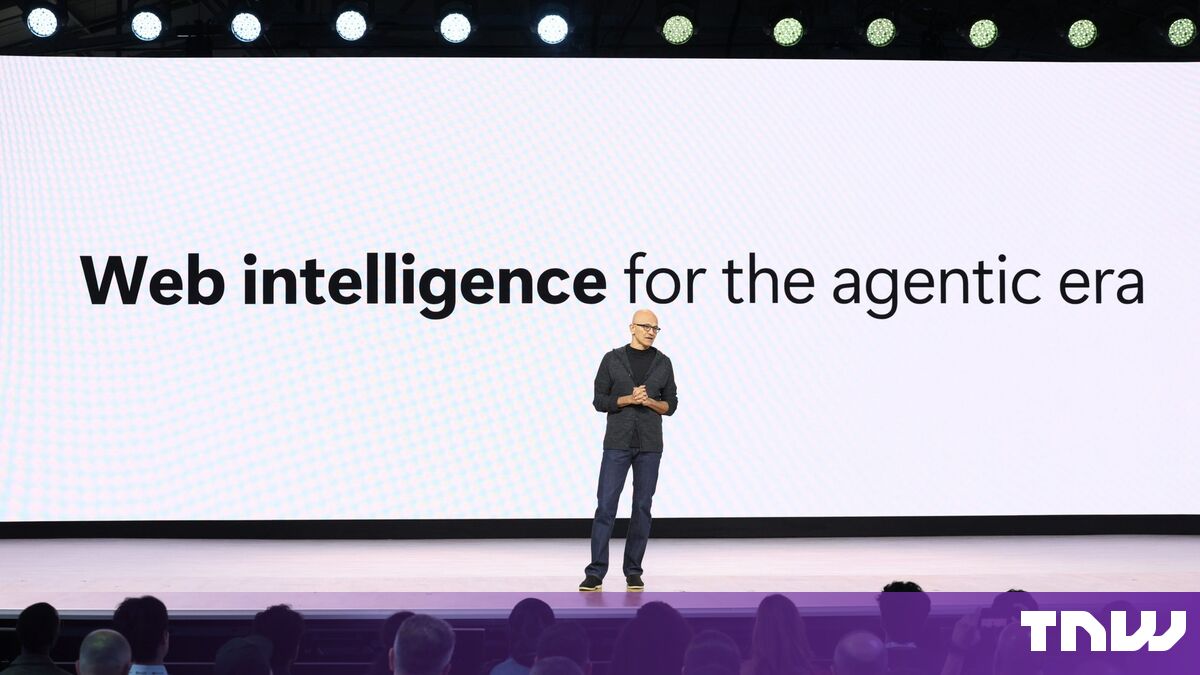
Anthropic’s Claude Code caught Microsoft off guard by moving coding from the editor to the command line, Satya Nadella said. Within about six months, the IDE “kind of faded away,” he told Gergely Orosz on The Pragmatic Engineer podcast.
Orosz, a former Microsoft engineer, recorded the hour-long interview in Redmond. It took place a few hours before Microsoft’s Outlook outage last Thursday, so the outage did not come up. Nadella also talked about Microsoft’s voluntary exit offers, junior hiring, and checking AI-written code.
‘AI-first product building is unforgiving’
Orosz asked how Microsoft, with GitHub Copilot and VS Code, had no immediate answer when Claude Code arrived in 2025. Nadella said Copilot began as code completion, and that Cursor then built a strong agent mode, which Microsoft matched.
“The thing that hit us was obviously the great work that Anthropic did with their model, which then truly made the CLI the form factor,” Nadella said.
“When model jumps happen nonlinearly, the form factor has to change quickly. AI-first product building in that sense is unforgiving,” he said. “Don’t be in love with what you built.”
He said the IDE could come back as developers embed decision models inside software. He called those models the stored procedures of the intelligence era.
Orosz asked directly whether Microsoft’s voluntary exit offers were a prelude to layoffs. Nadella did not answer that question. He said the offer was mostly about giving staff more agency. People can move into roles that make long-term economic sense for them.
“If you’re in a team where you feel stuck professionally, you can vote with your feet,” Nadella said. “I wish I could just sit here and say it’ll all be the same. I cannot.”
Many of those places are inside Microsoft itself, he added. He said not every part of Microsoft had “got the memo” on transforming. Team sizes and workflows will change across the company’s 200,000 people, he added. One of Microsoft’s fastest-growing jobs is the forward-deployed engineer.
On new graduates, Nadella said teams first need to reorganise and build their new “software factories.” Hiring early-career people comes after that. Drawing long-term conclusions from the slowdown now would be “too early,” he said. Microsoft has started a mentoring programme with Carnegie Mellon University, called PRAISE, for engineers early in their careers.
Verification is the hard part
“In a world where code generation has become cheap, what has become hard is verification,” Nadella said.
He said models used to critique code can carry alignment problems, so he favours checking one model family with another. He also wants production traces to feed a loop that verifies fixes, which he called “my RSI.”
Companies should treat AI agents as an “insider risk,” Nadella said. Models are getting more capable, but not more reliable, a point he also made on 20VC last month. He called for audited, tamper-proof logs of how agents reason.
He also told companies to keep their agent software, memory, and models separate, so no vendor locks them in. His test: a firm should be able to swap any model and still improve on its private evaluations.
“If you can’t do that, then you have to ask yourself how are you a sovereign firm,” he said.
Unmetered intelligence on the PC
Last year’s frontier models can already run on a laptop and last quarter’s on a desktop, Nadella said. He expects routers such as GitHub Copilot Fusion to send some tasks to local models and others to the cloud, which he called the start of a “hybrid intelligence era.” He described local models as “unmetered intelligence.”
His advice to engineers was to spend less time reading about AI and more time using it.
“If I could change the ratio of my talk to do, I would do it. This is the time,” Nadella said.