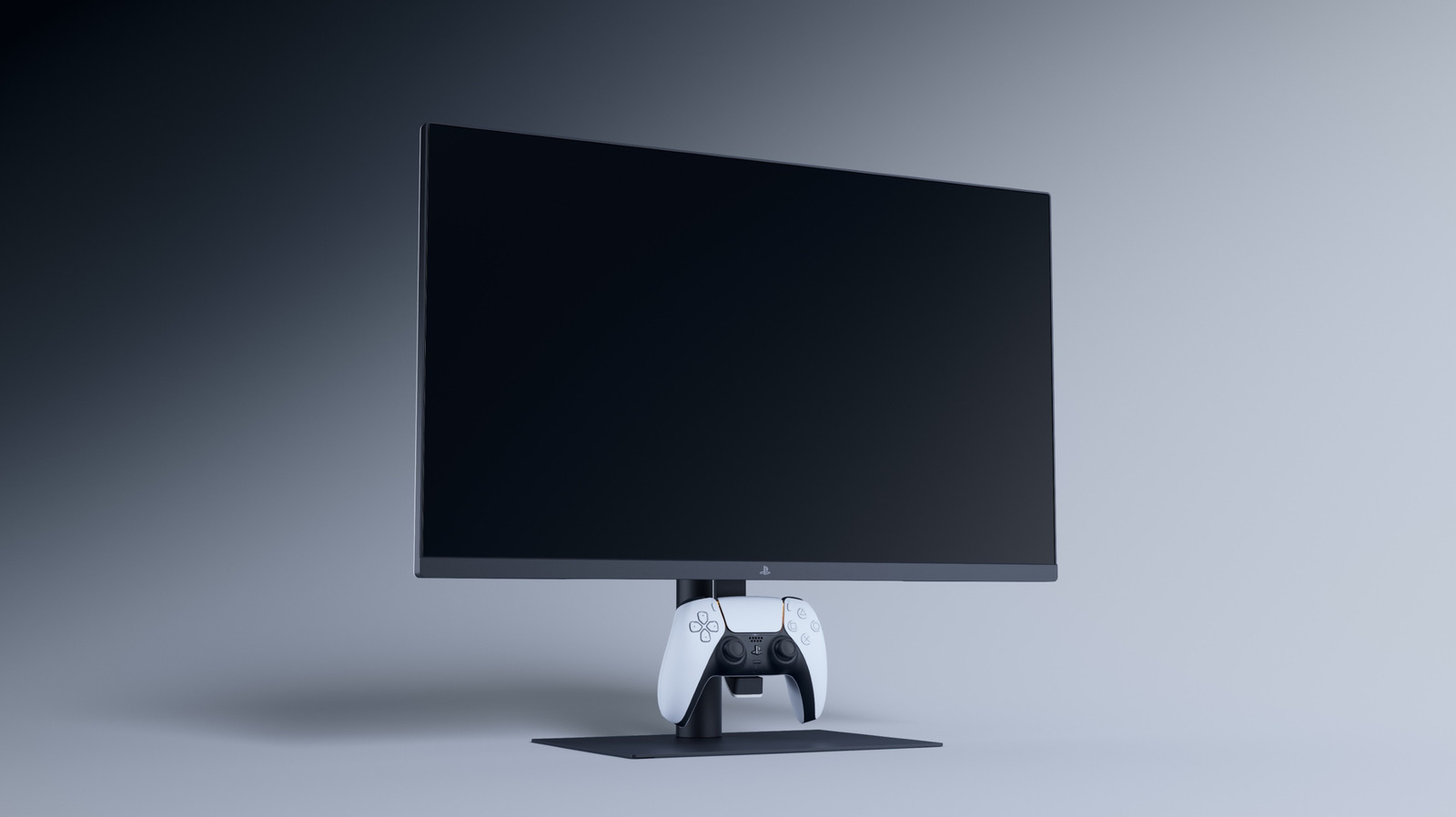
The DualSense monitor is a noticeable upgrade from both the 27-inch Samsung 1440p/144Hz TN display and the 24-inch Alienware 1080p/240Hz IPS display that I currently use. This improvement applies not only to gaming scenarios, but also your standard PC use cases, like working, creating, watching YouTube, scrolling Reddit and streaming .
Sony's marketing positions the monitor as a display for your desktop PS5, but this is an uncommon console configuration and it's one that I don't personally have set up in my home. So, I tested out the monitor the way most players will use it, as a PC peripheral that happens to hold and charge my spare DualSense. This worked out exceedingly well for my gaming habits, considering I play on PC and PS5, and I prefer to use a DualSense for both (keyboard and mouse players, don't come for me). However, outside of this one title, I tend to use the Wolverine V3 Pro for my Steam games, and there's no place to adorably dangle any non-DualSense gamepad from Sony's latest display. This is also true for literally every other monitor, of course.
I plugged in a set of Creative Pebble speakers and my PC, popped my favorite DualSense Edge on the dock, clipped a Logitech camera and Elgato light to the top of the monitor, and I was good to go. The display naturally rests parallel to the stand neck and it can be tilted upward about 30 degrees, but not downward. The tilt action is fluid and it sticks in place well. Shifting the screen vertically is less enjoyable but still easy: Hold a button at the back of the neck and the monitor clicks into place at varying levels. If you want to lower it more than 21mm from the top, you have to hide the charging dock first.
There's a large sliding glass door beside my desk, providing ample opportunity to test the monitor's glare-management abilities. The DualSense display has an eggshell-like coating that eats light like it's late for dinner, and it maintains a bright, crisp image even in a sun-drenched room. Things only improve in dimmer conditions, and the monitor's 240Hz refresh rate is a dream compared with my previous cap of 144Hz. With 1440p resolution, VRR and up to 240 fps in-game, I don't find myself longing for 4K visuals while playing or any other game. Of course, I'm not coming from a 4K monitor, so I would say that.
The monitor also looks great on the desk, with a wide and thin metal base, sleek cylindrical stand neck and subtle branding. Maybe my previous display was just severely unstable, but I find the DualSense monitor to be surprisingly sturdy, especially considering its minimal design. Say you share a desk with someone who has a habit of idly bouncing their legs throughout the day, intermittently shaking the entire workspace and sometimes even knocking over your aesthetically placed Sanrio figurines. (A totally random, hypothetical example, of course). The Sony Gaming Monitor holds up well to this type of abuse, wobbling just slightly even under extreme leg-bouncing conditions. It's far more stable than my previous monitor, and it doesn't make plastic creaking noises when it does sway. All told, it's a sturdy piece of equipment.