SpaceX caught its Starship upper stage returning from orbit on its first attempt, but the Super Heavy booster ended its flight in an explosion after recovery was aborted.
The catch was a remarkable achievement: Starship returned to the same launch tower it had left almost a day earlier, settling into its giant mechanical arms.
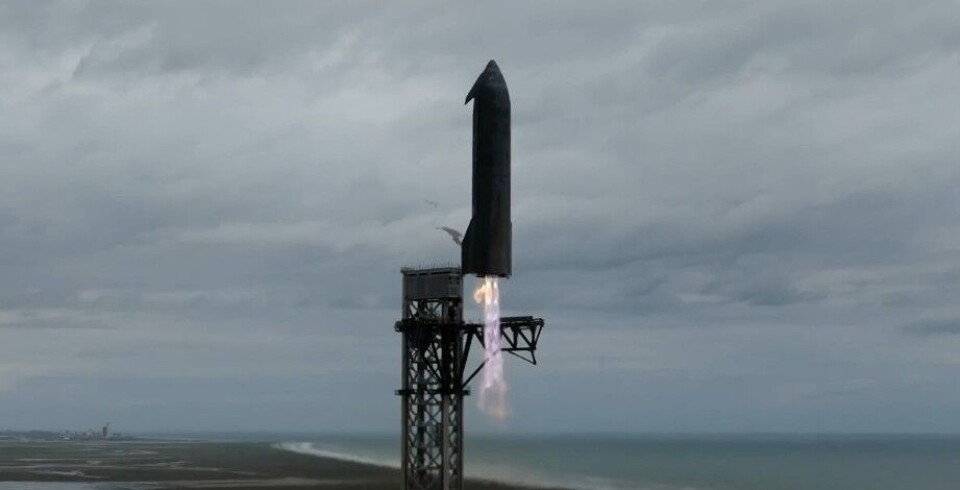
Flight 15 began well, with the 33 Raptor engines of the Super Heavy booster launching the stack from Pad 2 at Starbase, Texas. Hot staging followed, and the booster performed its directional flip maneuver.
Thirty-two Raptor engines relit for the boostback burn, intended to return Super Heavy to the tower for another catch. The booster had managed the maneuver on flight tests 5, 7, and 8, but this time something went wrong. "The boostback burn ended early due to low fuel mass," SpaceX said.
The booster automatically aborted its return to the tower and diverted offshore. It completed a landing burn, briefly hovering above the Gulf before its engines shut down and the flight termination system delivered an explosive finale.
Starship reached orbit under the power of its six Raptor engines and deployed 26 Starlink V3 satellites. Unlike the previous flight's brief orbital stint, this mission lasted almost a day.
Following a deorbit burn, Starship returned to the launch site 22 and a half hours after it left.
Many more development flights remain before SpaceX can deliver its promised fully reusable launch system. NASA's Space Shuttle came close, but the large external tank was expended with every launch, and the orbiters never matched the cadence SpaceX reckons it can achieve with Starship.
SpaceX boss Elon Musk admitted that "many small fixes are needed to achieve immediate reusability (like an airplane)."
Cadence will be key if Starship is going to meet NASA's needs for the Artemis missions. Somewhere between 6 and 22 launches (depending on who you ask) will be required for a lunar mission, and SpaceX has yet to demonstrate in-space propellant transfer between vehicles.
Next year's Artemis III mission also calls for docking tests between NASA's Orion spacecraft and a test version of SpaceX's Starship Human Landing System (HLS) in low Earth orbit.
The booster fumble shouldn't obscure what the engineering teams achieved. Now comes the small matter of doing it again – preferably with both stages intact. ®