Appeals court ruling rejected grant cancellations on First Amendment grounds.
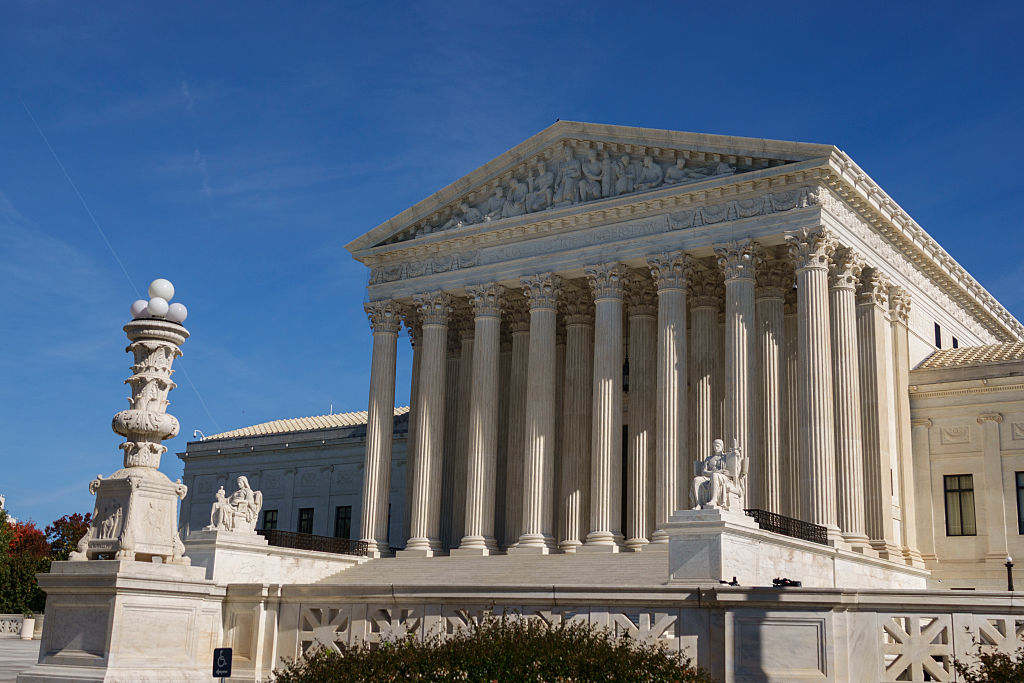
On Monday, the Supreme Court announced it would not hear an appeal of a lower court decision that blocked the government from canceling the grants of a handful of researchers whose funding had been revoked during the Trump administration’s purge of DEI-related work. While the decision applies to only seven researchers in California, the lower court had ruled that the government’s actions violated the First Amendment and so may have broad implications.
The Supreme Court provided no discussion of its rejection, and no justices filed a dissent regarding the decision.
The suit was initially filed by a large group of researchers at the University of California, Berkeley and UC San Francisco, contesting grants originally issued by many federal agencies, from the National Institutes of Health to the Department of Transportation. At issue were grants that had been terminated because the agencies decided they violated a Trump executive order blocking the use of DEI. This occurred despite the fact that the government hadn’t bothered to define DEI, and targeted grants were often identified by little more than a keyword search.
In the wake of a Supreme Court decision that held that most grant termination cases had to be heard by a different court, the case was narrowed considerably to just seven UC researchers and a handful of agencies: The Environmental Protection Agency, the National Science Foundation, and the National Endowment for the Humanities.
The researchers argued that the grant cancellations were viewpoint discrimination that violated the First Amendment. A District Court agreed, issuing a preliminary injunction that would restore the grants given to these researchers.
That decision was upheld by a Court of Appeals panel. It ruled that, while the government has the option of eliminating grant that it determined were no longer appropriate, canceling individual grants that it disagreed with is an attempt at “suppression of dangerous ideas.” In support of this, it cited Supreme Court precedent regarding religious viewpoint discrimination.
The court ruled that DEI fits in this framework because it “convey[s] the viewpoint that the exclusion of historically disadvantaged groups is undesirable.” As a result, “the government has not merely exercised its power to choose the programs it funds but has instead terminated individual grants in existing programs based on the perceived viewpoints of individual speakers.”
Assuming this case continues, the Supreme Court may find other chances to intervene. But the fact that it hasn’t done so now is striking, given that it could easily have objected to everything from the venue to the decision that the government’s actions constituted viewpoint discrimination. And its lack of intervention may be interpreted by other courts as a sign that the government’s anti-DEI efforts are on shaky legal ground.