If a beach or riverside spot in England is popular with swimmers, anyone can apply for it to be given official bathing status. Official status means that the water will be tested and monitored regularly, and given a rating from “excellent” to “poor”.
Now, though, popular swimming spots can be refused official bathing water status in England if government agencies judge that meeting minimum water quality standards will be too difficult or disproportionately expensive.
Until recently, official bathing status was granted to a place being used by large numbers of swimmers – the water did not have to be clean before designation. A site could be granted official bathing status while being classified as “poor”, with recommendations to avoid swimming there. Bathing status designation and water quality classification were separate.
But official status requires regular Environment Agency testing for bacteria that indicate faecal contamination, with up to 20 samples taken during the bathing season, from May to September. Further requirements include information for swimmers and duties to investigate and address pollution.
England’s new rules, in force since May 2026, have added a check before official designation. Can water realistically be improved to at least “sufficient” status without disproportionate expense? A polluted site can still be designated if it passes that assessment, but designation must be refused if ministers accept that improvement is not feasible or is considered too expensive.
If status is refused by the Environment Agency (with final decisions being made by Defra, the government’s Department for Environment, Food and Rural Affairs), who will tackle the water pollution and keep swimmers informed?
Designation driving improvement
Church Cliff beach in Lyme Regis, Dorset, was first designated as a bathing water in 1988. Its water was classified as “poor” in 2015. Routine testing for bacteria in water stopped when the beach lost its official status in 2016 due to so few people swimming there.
But some people did continue to swim at Church Cliff beach. For two years, campaigners fought to restore its designation as an official bathing spot and secure action on pollution. The town council supported the public call for redesignation and subsequent water quality monitoring. People were still swimming at this beach and when designation returned in 2024, testing for bacteria resumed and pollution information signs followed. But the water had not been cleaned up in the interim and this site was classified as “poor” again that year.
Designation could help drive the work needed to help clean up water pollution. After redesignation of Church Cliff beach, the Environment Agency drew up a plan in 2025 to reduce sewage discharges, fix leaking pipes and tackle farm pollution. Utility company South West Water committed to sewage upgrades, while the town council worked with the Environment Agency to set up a group to oversee improvements.
For new applications, this process will not be possible if it is judged that improving water quality is not feasible or would be disproportionately expensive.
The government argues that limited resources should go where they can deliver results. It also wants to avoid giving swimmers false reassurance about places that cannot meet minimum standards. Yet Defra’s original 2024 consultation on reforming bathing water regulations acknowledged that refusing designation could discourage investment at polluted sites. Whether that happens will depend on how decisions are made and what follows.
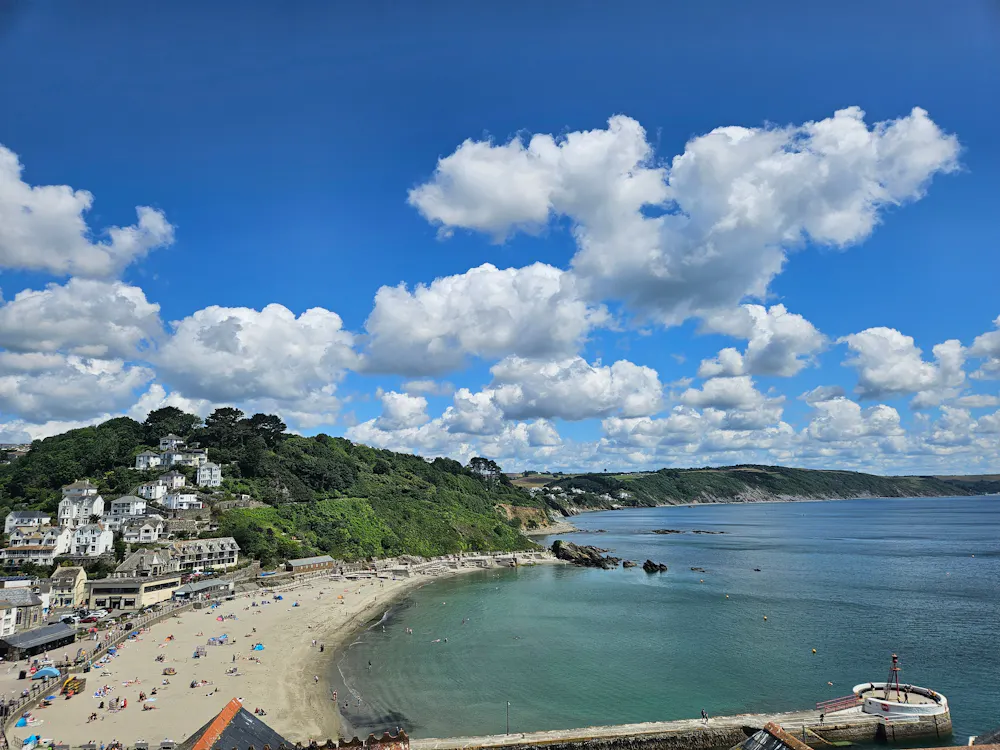
These decisions depend on understanding pollution sources. At East Looe in Cornwall, the bathing water was rated “poor” in 2015. After heavy rain, the River Looe can carry runoff from farmland and sewage from overflowing sewers miles downstream to the beach.
Different sources call for different measures. Upstream in Liskeard, South West Water built two underground tanks to store wastewater during storms and reduce sewage spills into Looe Bay. This was part of a bathing water scheme completed in spring 2015. Cornwall Wildlife Trust offered farmers grants for better roofing and drainage to keep farm waste out of streams during heavy rain. In 2019, East Looe’s bathing water earned its first “good” rating, which it still held in 2025.
The new rules under scrutiny
The new bathing water status application process includes water quality checks before designation and, where necessary, an assessment of whether improvements are feasible. But the published guidance does not specify how thoroughly each pollution source will be investigated.
The watchdog, the Office for Environmental Protection welcomed the reforms. It has also called for clear reasons and public involvement.
Defra’s guidance on bathing water applications says decisions will be explained. Details of the feasibility assessment will follow. It remains unclear whether the method will follow the watchdog’s advice on calculating cleanup costs.
The environmental campaign charity Surfers Against Sewage is challenging the rules in court. Surfers Against Sewage argues that the new rules undermine the protections that designation is meant to provide. The High Court granted permission for the challenge to proceed in October 2026, with a hearing scheduled for February 2027.
Any refusal should explain which pollution sources were investigated, why cleanup was judged infeasible or too expensive, and what could allow reconsideration. It should clarify which monitoring will continue and who will inform swimmers. This would help people make informed choices and communities track whether pollution is being tackled.
For swimmers and river users, the consequences go far beyond a place on an official list. Without clear warnings, people may unknowingly enter polluted water and develop infections. These can cause diarrhoea and vomiting and, in severe cases, life-threatening complications such as kidney failure. Refusal should never mean abandoning efforts to improve water quality.