
The US has some of the worst indoor mobile phone signal, according to a survey from Ookla (via Android Authority).
The survey, which measured indoor phone signal across a year, in over 100 cities in 60 countries. The results paint a terrible picture for US carriers, as it shows the US has some of the worst indoor signal strength across the cities surveyed.
The US performs poorly in Ookla's worldwide tests
Poor overall network quality seems to be the main problem
While most of us likely use WiFi when indoors, that's not always an option. Thankfully, that's where our phone's 5G and 4G signals can help. Modern data connections are fast enough to handle most everyday streaming and basic tasks, making it easy to swap over to mobile signal whenever it's needed.
Except, that's not always true. , the best-known mobile surveying company, has discovered that US mobile networks are some of the worst in the world, at least where indoor signal strength is concerned.
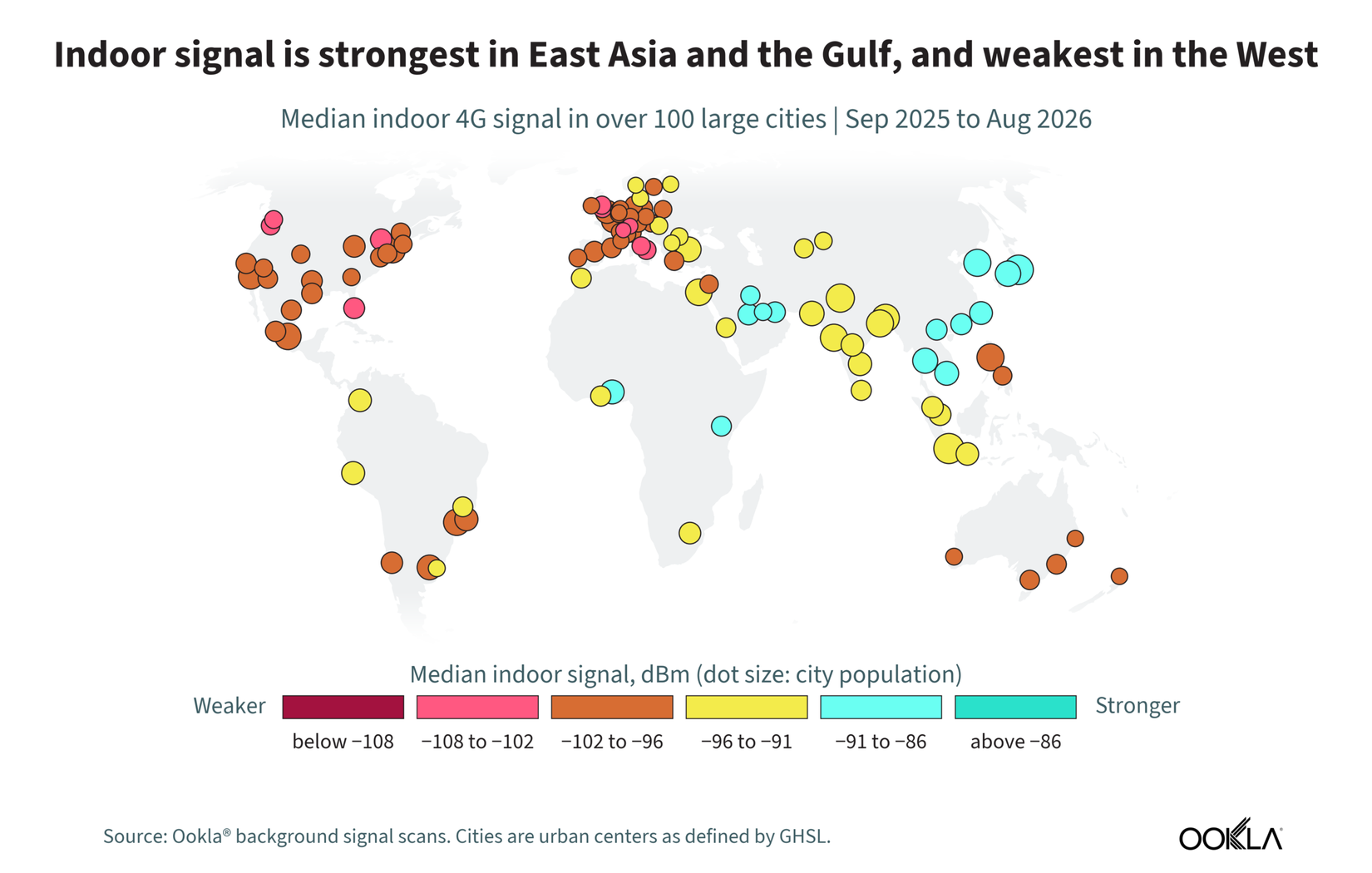
In a year-long survey, Ookla tested the signal strength in over 100 cities across 60 countries. In that survey, it discovered that indoor signal strength was the strongest in East Asian, Southeast Asian, and Gulf cities, while cities in Europe, North America, and Oceania suffered with below average strengths.
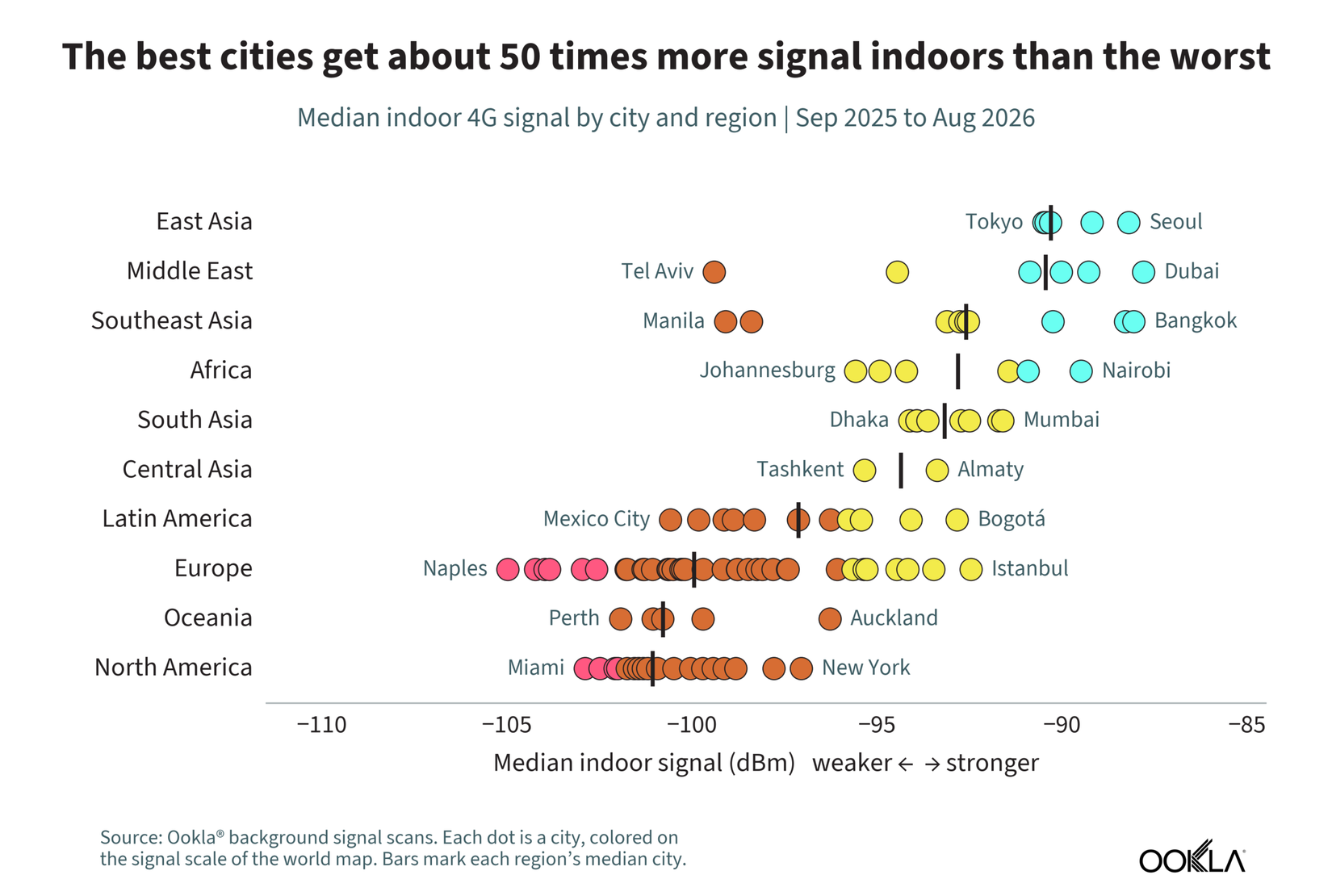
It's not a small gap either. According to Ookla's breakdown of the numbers, the difference between the median signal strength in the best and worst cities was 17 dBm. Which doesn't sound like much, until you realize that means a difference of 50 times pure signal power.
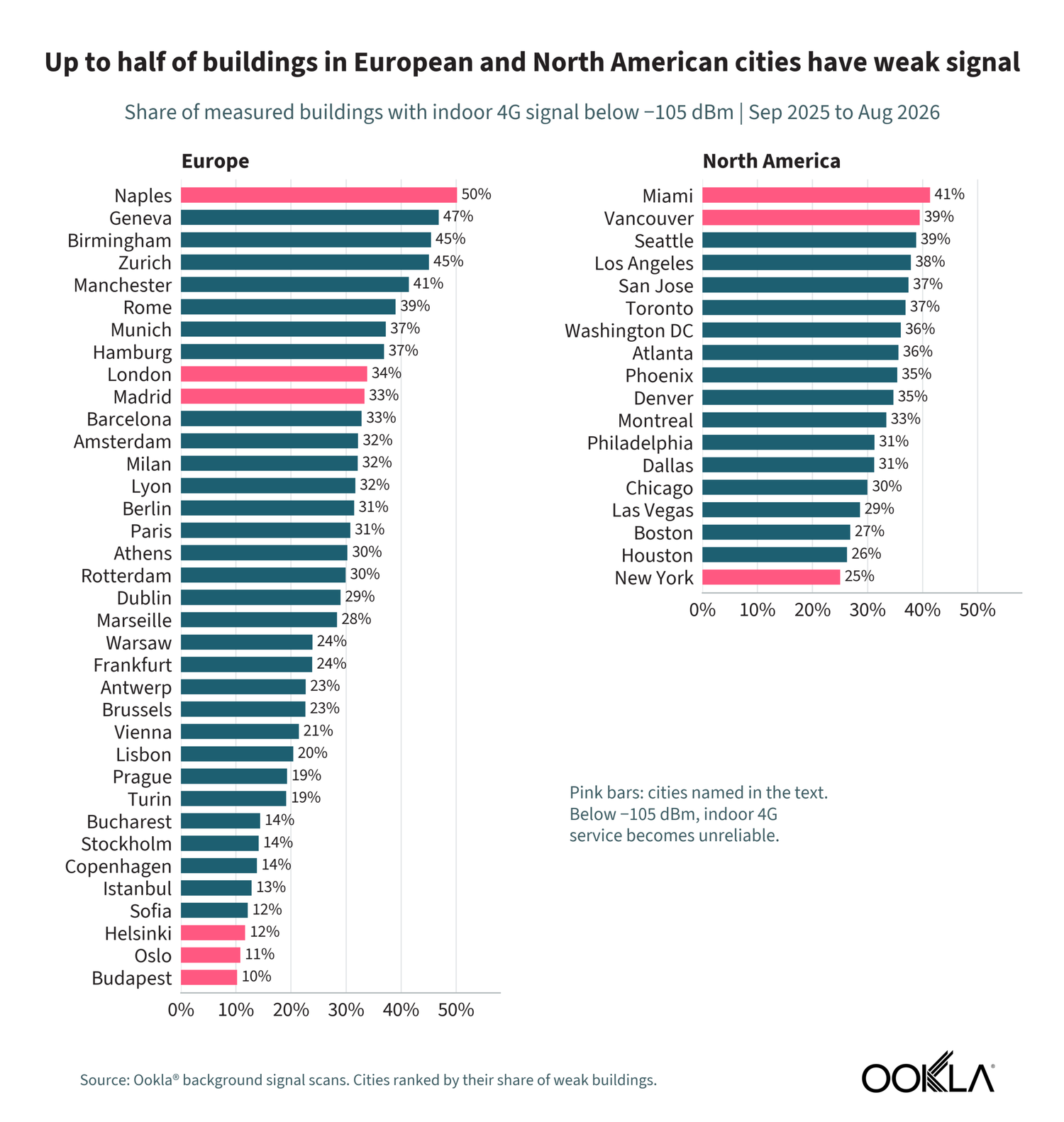
Miami was the leading loser in North American cities, closely followed by Vancouver and Seattle. While it may be tempting to blame the low signal strength on robust buildings, as materials like concrete do block signals, Ookla's survey actually says the opposite.
North American cities experienced one of the smallest drops in signal strength when moving indoors. That points to the problem being with the overall mobile data signal, rather than thick building materials blocking signals.
The problems stemming from this loss of signal strength are obvious. Download and upload speeds alike suffer when signal strength is low, and that's simply not what you pay for.
Ookla's report also points out that carriers often don't bother testing indoor signal strength, preferring to assume numbers based on basic calculations.
Carriers have been taking action to strengthen network signals in the last few years, but Ookla's report shows they clearly still have a long way to go.
Even worse, it may get harder to build up a robust network, due to ongoing work in many countries to strengthen the insulation on many older buildings. Because the effects of climate change mean we're likely to see stronger winters in many parts of the world, there's been a lot of effort put in to blocking heat from escaping homes and other buildings. That increased insulation will also block signals.
However, if this report tells us anything, it's that a stronger outdoor network is the best way to ensure indoor signal strength, regardless of loss from building materials. Hopefully, the next time this survey is run, North America will see better results.