Stronger filament doesn't automatically mean a stronger print, and the toughest materials can require better hardware too.
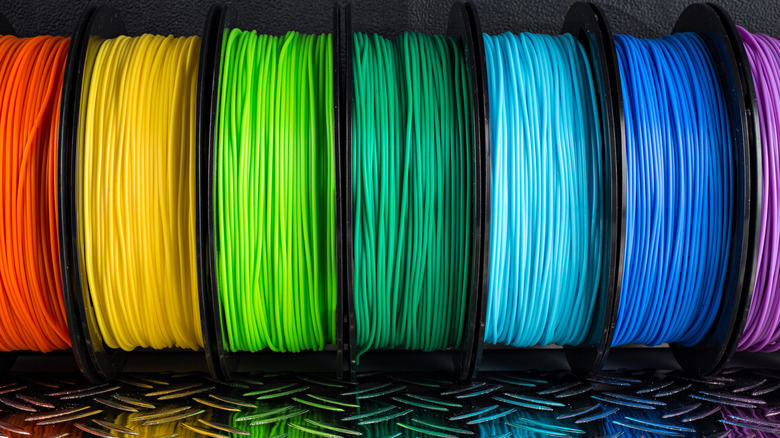
If you're looking for one winner, it's not exactly convenient that a 3D print can be "strong" in a few different ways. A rigid bracket should resist bending, while a part that gets knocked around may last longer if it can flex and recover instead of breaking. In this article, we're going to hone in on rigidity and the types of materials that work well for structural parts.
Carbon-fiber-reinforced nylon (PA-CF) and polycarbonate (PC) are two of the strongest practical materials for the kind of filament-based 3D printers that are accessible to the average maker. Both materials can handle demanding functions, higher temperatures and considerably rougher treatment than everyday polylactic acid (PLA) or glycol-modified polyethylene terephthalate (PETG).
Sure, there are stronger, more expensive specialty materials that could vie for the title of heavyweight filament champ. But let's stick to the pros and cons of carbon-fiber nylon versus polycarbonate, so you can decide which material packs the most punch for your projects.
Carbon-fiber nylon is built for structural parts
Carbon-fiber-reinforced nylon (PA-CF) combines nylon with short carbon fibers — hence the name. Nylon already handles demanding functional parts well, and the added fibers make the finished material stiffer and more resistant to bending under load. How resistant, you ask?
Bambu Lab's dry-state test puts its carbon-fiber-reinforced nylon 6 (PA6-CF) at 151 megapascals (MPa) of bending strength. Its heat-deflection temperature is 186 degrees Celsius, meaning it resisted deformation under a specified load until around that temperature. Those figures help explain why carbon-fiber nylon is used for brackets, fixtures and other working parts instead of for items that simply sit pretty on a shelf.
A strong filament, however, does not necessarily make a strong print. How you orient the object on the print bed, plus wall thickness, infill and part shape, can significantly change how much abuse the project can take. Bambu Lab does not claim the 151 MPa result applies to every finished print. Pricing is another factor to note, as Polymaker currently lists a 1kg spool of its Fiberon PA6-CF20 at $52.99 at time of writing
There is some hardware housekeeping to contemplate too. Carbon fibers are abrasive, so your old faithful brass nozzle may not last long. Bambu recommends a hardened steel nozzle, requires PA6-CF to be dried before use, and lists a nozzle temperature of 260 to 290 degrees Celsius with an enclosed printer when using this material.
The National Institute for Occupational Safety and Health (NIOSH) says fused-filament desktop printers can emit respiratory irritants and ultrafine particles, so good ventilation or filtration is important to consider.
Polycarbonate is strong without the carbon-fiber headache
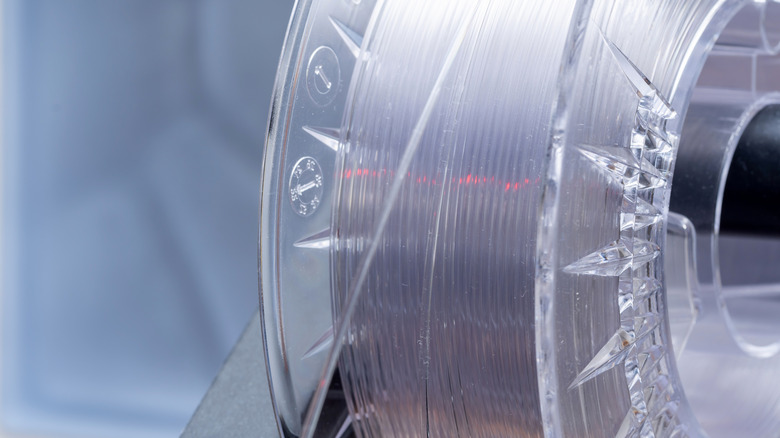
Unlike carbon-fiber composites, polycarbonate (PC) produces strong parts without chopped fibers. It's a stiff engineering plastic with good heat resistance, making it suitable for housings, brackets and other parts that need to withstand more than light use.
Once again, you'll need to consider your equipment and workspace before deciding if PC is the best and strongest filament for you. Similar to PA-CF, Polymaker recommends a nozzle temperature of 250 to 270 degrees Celsius, a 90 to 105 degrees Celsius heated bed, and an enclosed printer. The company says large, dense parts require a heated chamber, which helps reduce uneven cooling and warping. Good workplace ventilation or exhaust is recommended.
When it comes to strength, print direction matters, too. Polymaker measured 69.1 MPa of tensile strength across the printed layers and 52.8 MPa between them. PC's bending strength clocked in at 106 MPa, a drop compared to the 151 MPa logged for PA-CF.
The big difference with PC versus PA-CF is the price. Polymaker lists PolyLite PC at $29.99 for a 1kg spool and PolyLite PLA at $19.99at time of writing. The bigger pain point could be your printer, since lower-cost models may struggle to maintain the temperatures PC prefers.