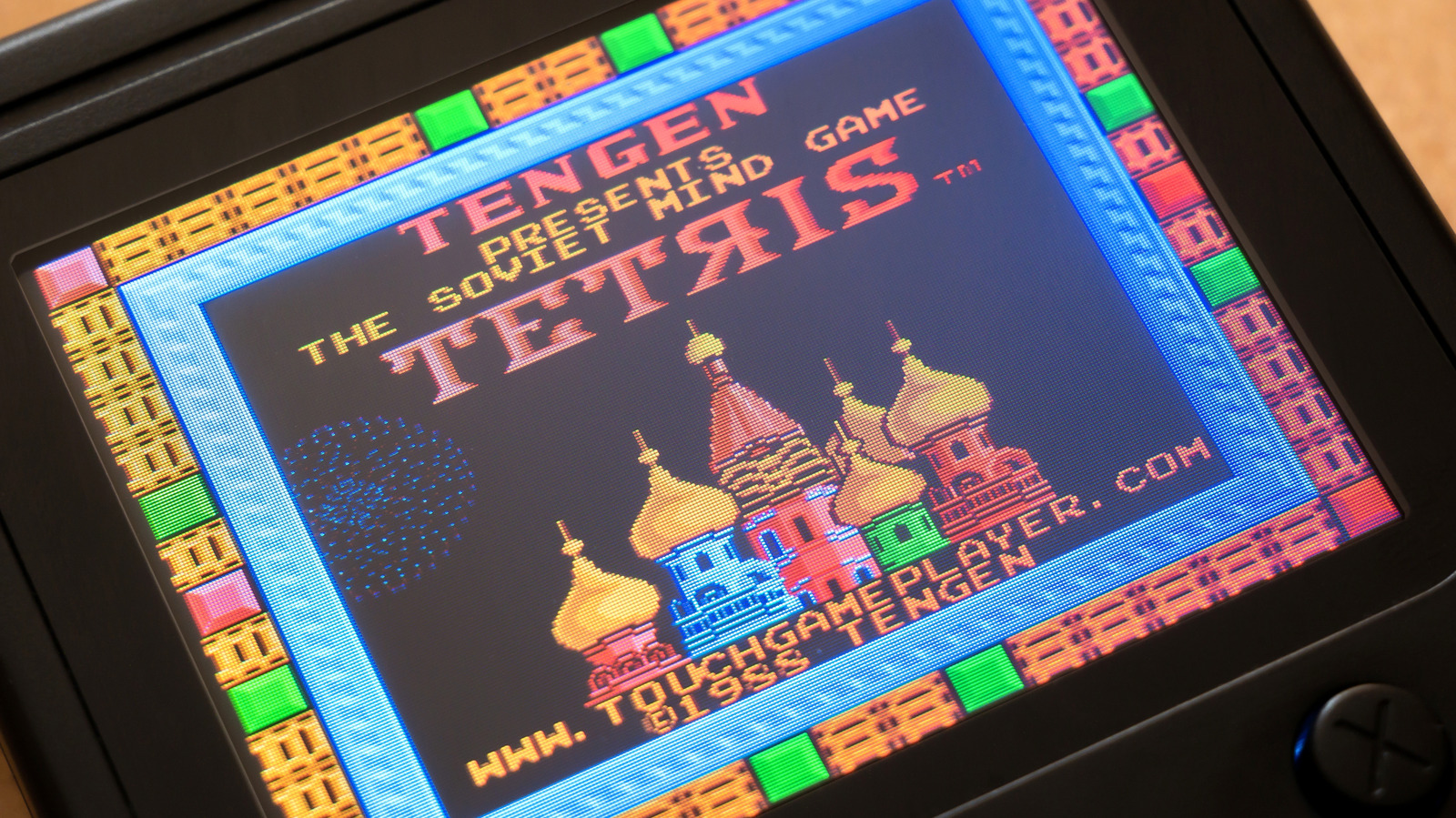
It's not feasible to discuss every version of , but it's interesting to look at some of the most notable iterations. The NES release, which also debuted in 1989, is unique because it wasn't intended to be played indefinitely like most other versions. Instead, the game speeds up drastically past a certain point, which was designed to be a run's natural ending. This initially led to competition centering around racking up a max score before the "kill screen," but in recent years, players have developed techniques to play past the point that was previously thought impossible.
NES also makes for a good competition version because it's more "hardcore." It lacks quality-of-life features present in later releases, like holding a piece, plus there's no grace period for movement once a tetromino touches the bottom — it's locked in instantly. And unlike later games that have a pseudo-random system to make sure you get each tetromino shape every so often, NES can have droughts where you never see the I-block you need.
The Game Boy Color got in 1998, which updated the Game Boy release with color. It was the first version to offer the now-staple Sprint mode, where you race to clear 40 lines instead of the typical endless gameplay. , released on Nintendo 64 in 1999, was the first mainstream version to allow four players to compete simultaneously. It also marked the introduction of the ability to hold a piece to swap in later.
(2006) is beloved for featuring multiple modes, each themed in the style of Nintendo franchises like and . It's regularly cited as one of the best releases and was the first official game to feature online play.
In the modern age
Skipping forward a bit, is a fun mix of two classic puzzle series. Puyo Puyo is big in Japan but rarely received releases in other regions before this, with most of them being reskins under other franchises like Dr. Robotnik's Mean Bean Machine and . After its Japanese release in 2014, arrived in other regions in early 2017, with various modes that mash up the two play styles.
2018's is the most beautiful version of the concept. It takes you on a "journey" through various visual landscapes, with lovely background music to immerse you in the experience. You also have the ability to stop time and clear more than four lines at once. It was initially limited to VR platforms, but an expanded version called brought it to all modern systems in standard view. Meanwhile, in 2019, adapted the battle royale craze to the puzzle game, pitting you against 98 people and rewarding you for knocking others out by sending garbage to their boards.
Most recently, 2024's serves as an interactive museum of the series after 40 years, including interviews and various playable versions.